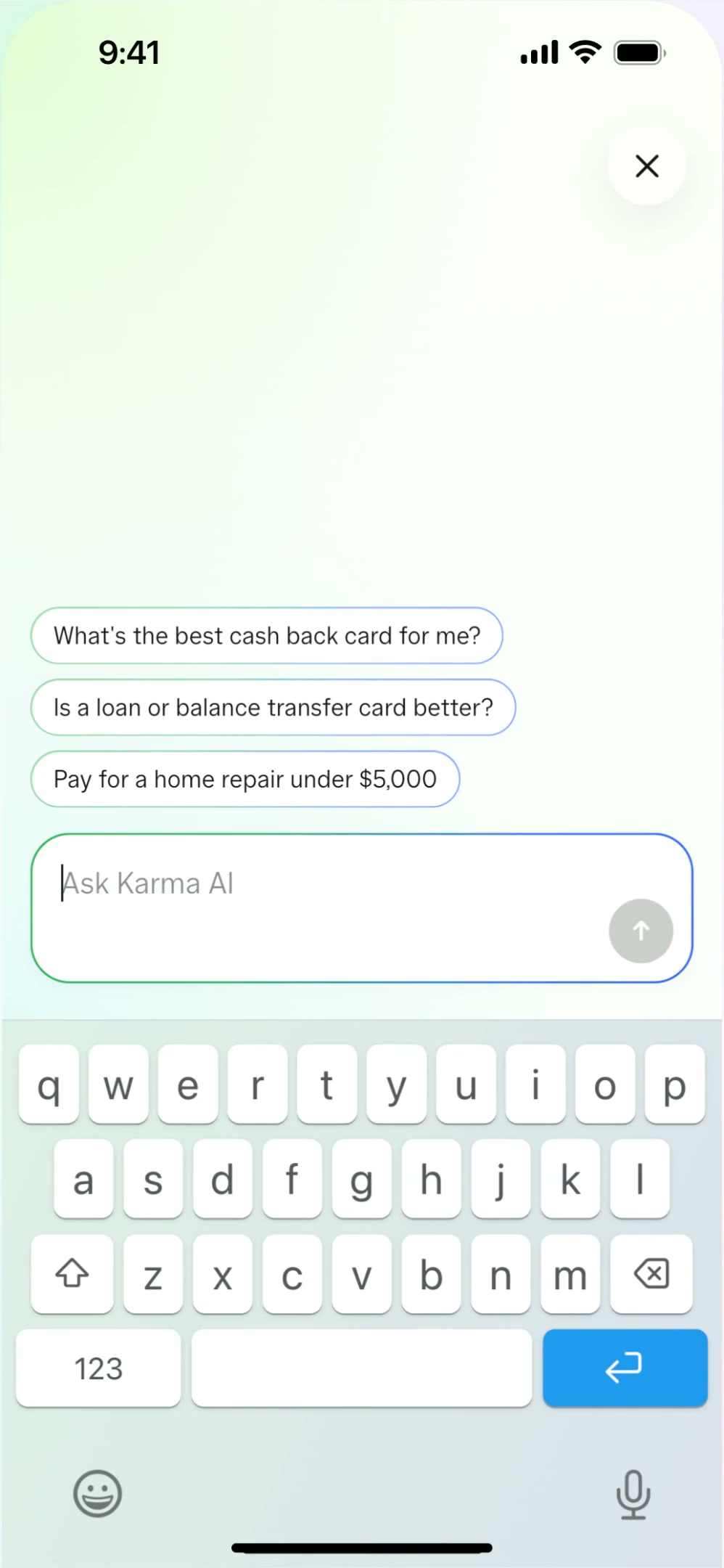
Challenge
Most users did not believe Credit Karma’s offers were personalized
Credit Karma’s ranking model already used user data for personalization, but users could not see why an offer was relevant to them. In interviews, over 80% did not believe offers felt meaningfully personalized. I helped the team test whether generative AI could make financial shopping feel more personal, explainable, and safe to act on.
Approach
Setting the vision for AI-first marketplaces
I worked directly with Credit Karma’s Chief Product Officer and other senior leaders on an AI-centered vision for financial guidance. My role was to define the product vision and prototype how the app could guide decisions, including shopping for new financial products. The prototype started with a series of situational user problems, then connected those moments to working product flows leadership could evaluate as potential new features. This initial vision work helped shape the roadmap: where AI should appear, what user information it should use, and how an answer should connect to an offer or action.

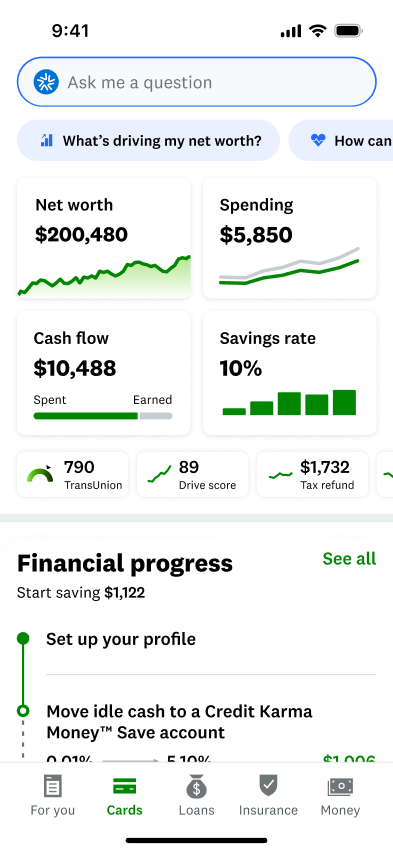
Experiments tested the impact of AI on personalized shopping experiences
I designed controlled experiments across multiple surfaces, including credit card and loan marketplaces, to test user action when the product used AI to explain why an offer fit their specific financial situation.
I partnered with an Analytics partner to measure and compare offer experiences with AI-generated explanations against comparable offers without them. Some tests explained why the top offer fit the user’s profile. Others added AI guidance and evaluations to credit card and loan shopping flows and offers.
- The data showed a clear pattern: Personalized context increased offer follow-through, with lift varying by surface.
See Why
- +1.9%
- revenue per user
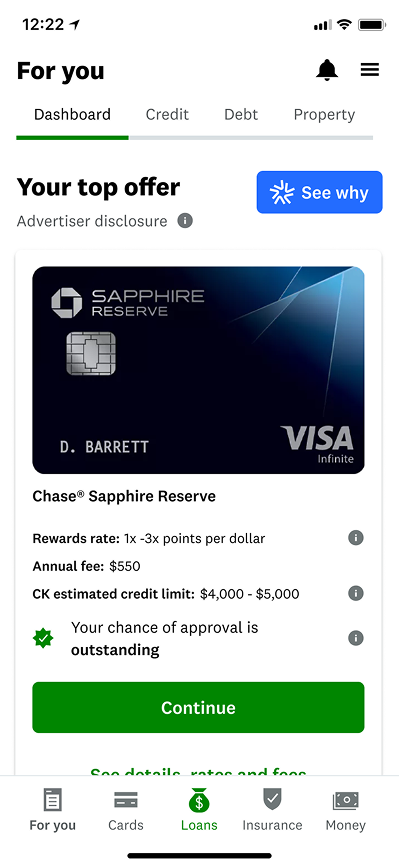





 Chase® Sapphire Reserve

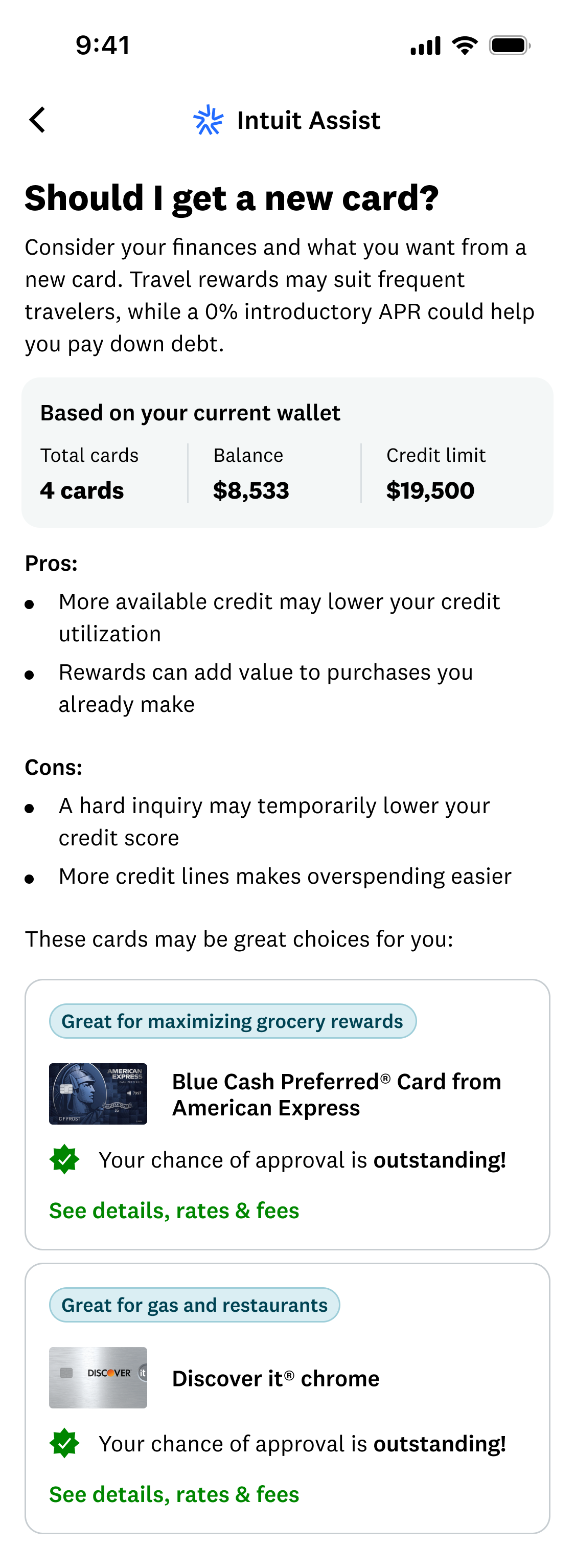
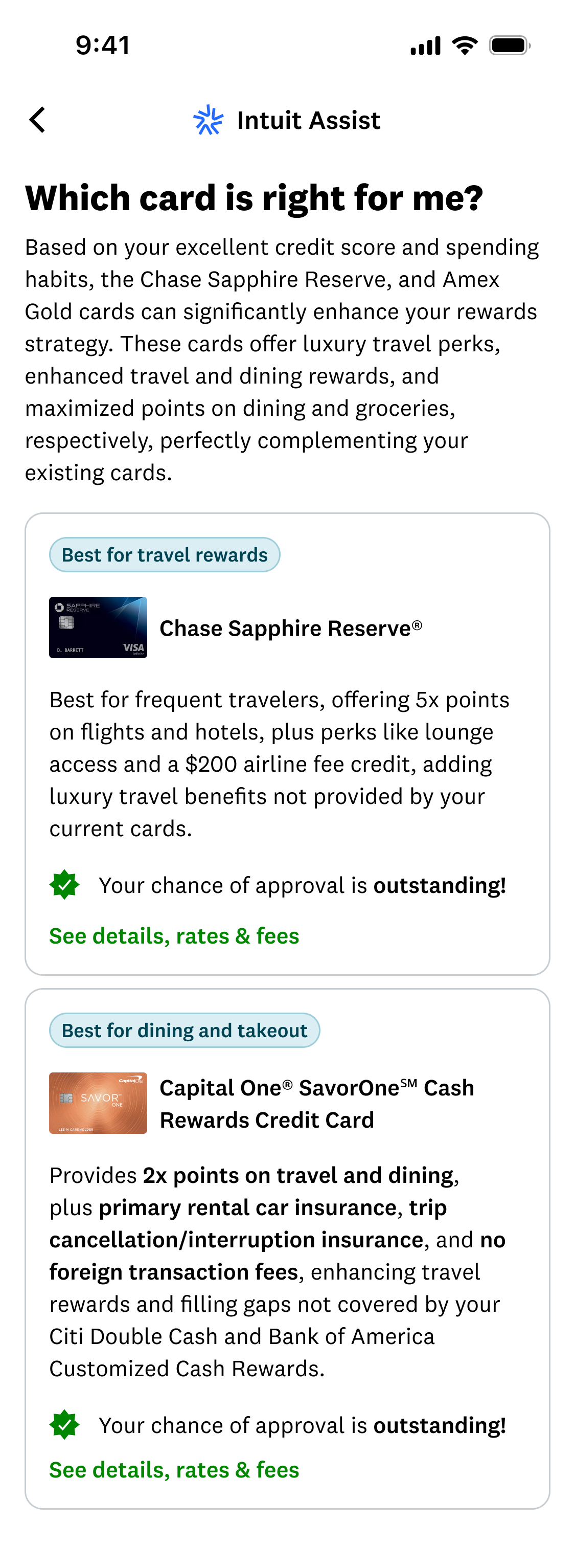
Explaining the trade-offs between multiple options
The right financial product depends on the person. Travel habits, fees, rewards, monthly payment, loan term, urgency, and risk can all change the recommendation.
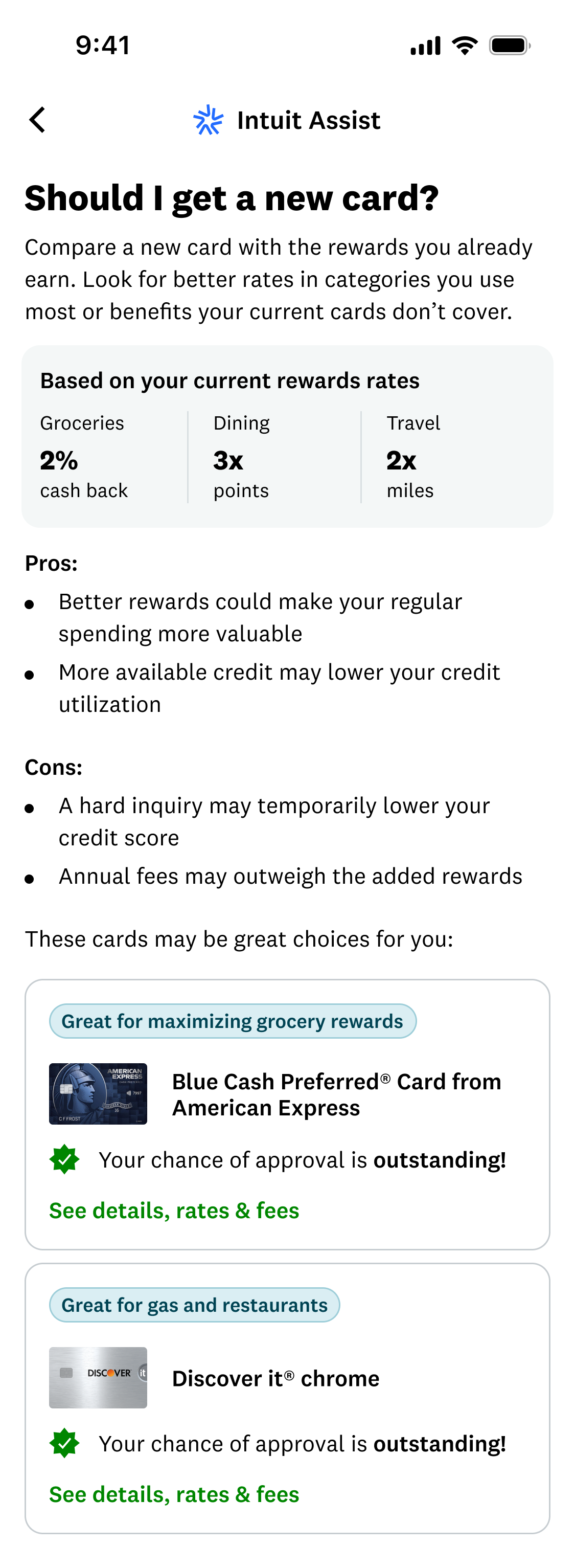
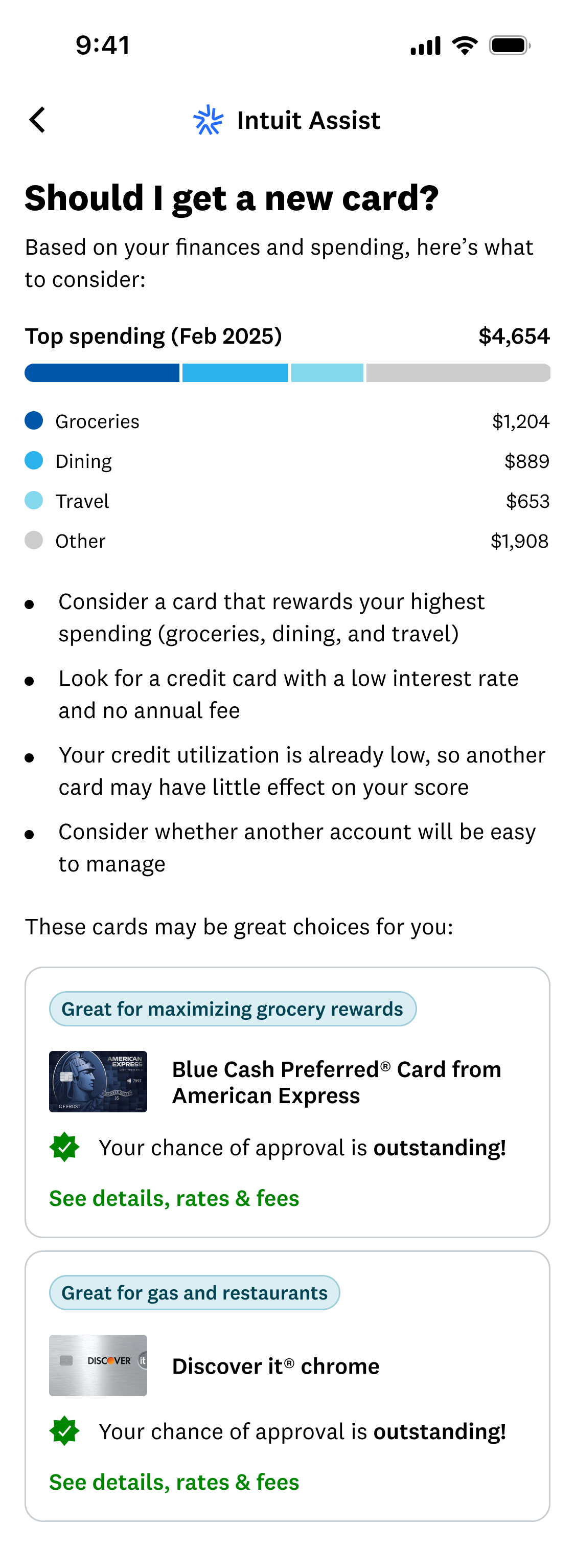
I created a system that used generative AI to explain those trade-offs in plain language. One experiment compared strong card options and explained why one fit a user’s habits better. Another reviewed the user’s wallet, explained what it found, and connected gaps to product options.
Should I Get This Card?
- +2.3%
- revenue per targeted user
Help Me Decide
- +2.1%
- revenue per user
Explain when an offer is objectively better
Some offers were only worth showing when the numbers clearly favored the user.
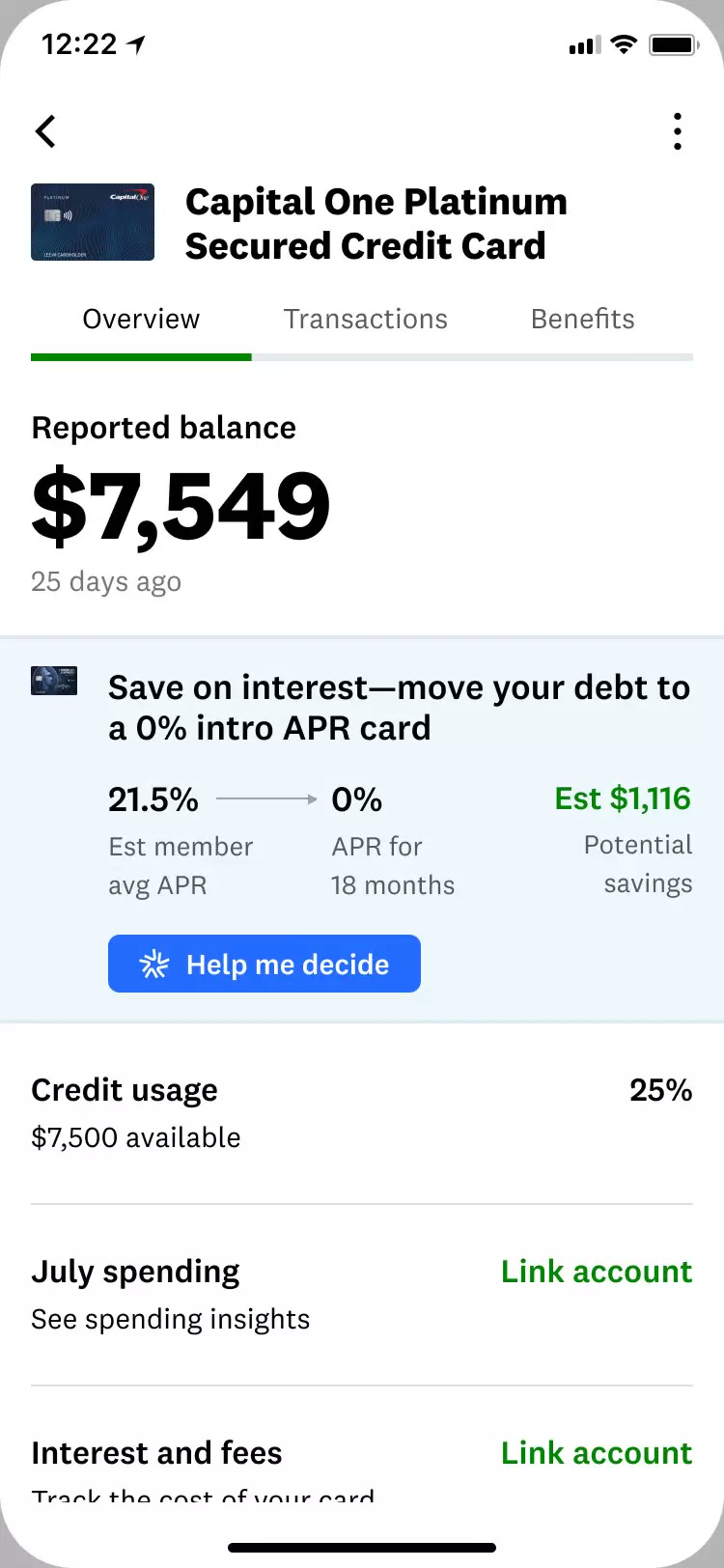
I designed multiple ways to surface an offer only when it objectively improved a user’s financial position. Internally, we called these Snipes. AI-generated content translated the proof into plain language: why the offer was better, what changed for the user, and what tradeoff still mattered.
It was one of the strongest experiments, increasing revenue per targeted user by 5.1%. Reach was limited because the experience only appeared when Credit Karma had enough evidence to make a strong recommendation. The learning still mattered: the more the page was generated around a specific user advantage, the stronger the response.
Snipes Explainer
- +5.1%
- revenue per targeted user
From personalized explanations to fully generated marketplaces
Based on the success of the early experiments, I pushed the work toward a bigger question: could we generate the full shopping experience around the user with an AI-powered backend?
I had also been working with another team of designers that was testing open-ended financial-advisor queries in parallel to my experiments. Working closely with that team, I used their learnings about natural-language questions and suggested prompts. We partnered to create shared design patterns across AI surfaces, and I brought those patterns into the marketplace direction.
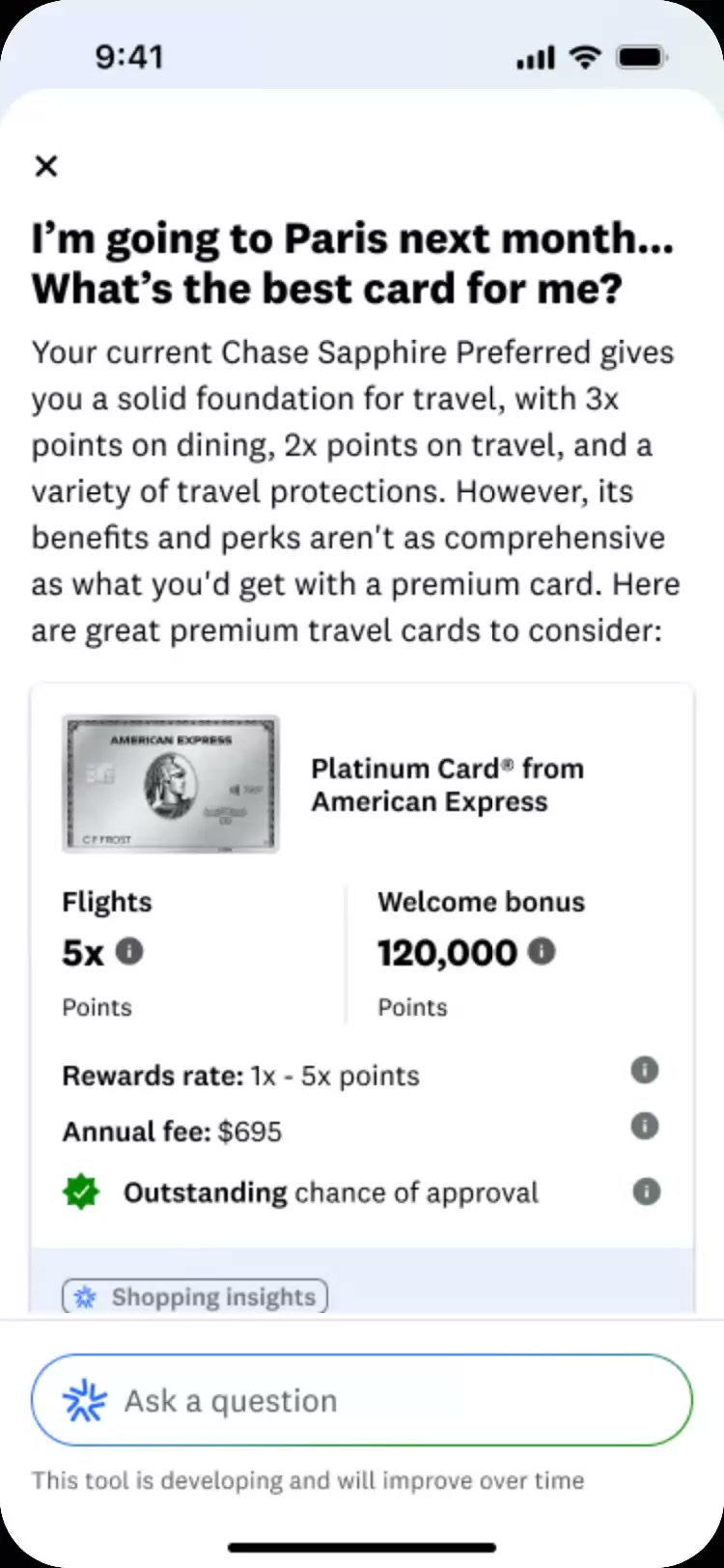
That led me to the idea of generating the entire shopping experience around the user’s intent: page structure, comparisons, offer data, and follow-up paths. Users could ask specific questions, such as “I’m going to Paris next month. What’s the best card for me?” and those questions could drive a completely personalized page based on their question and profile data.
Key learning: let intent generate the marketplace
The experiments pointed toward a marketplace that could start with a user’s own words, read the intent, and build the page around the decision.
Scale the model for loans and other financial shopping decisions
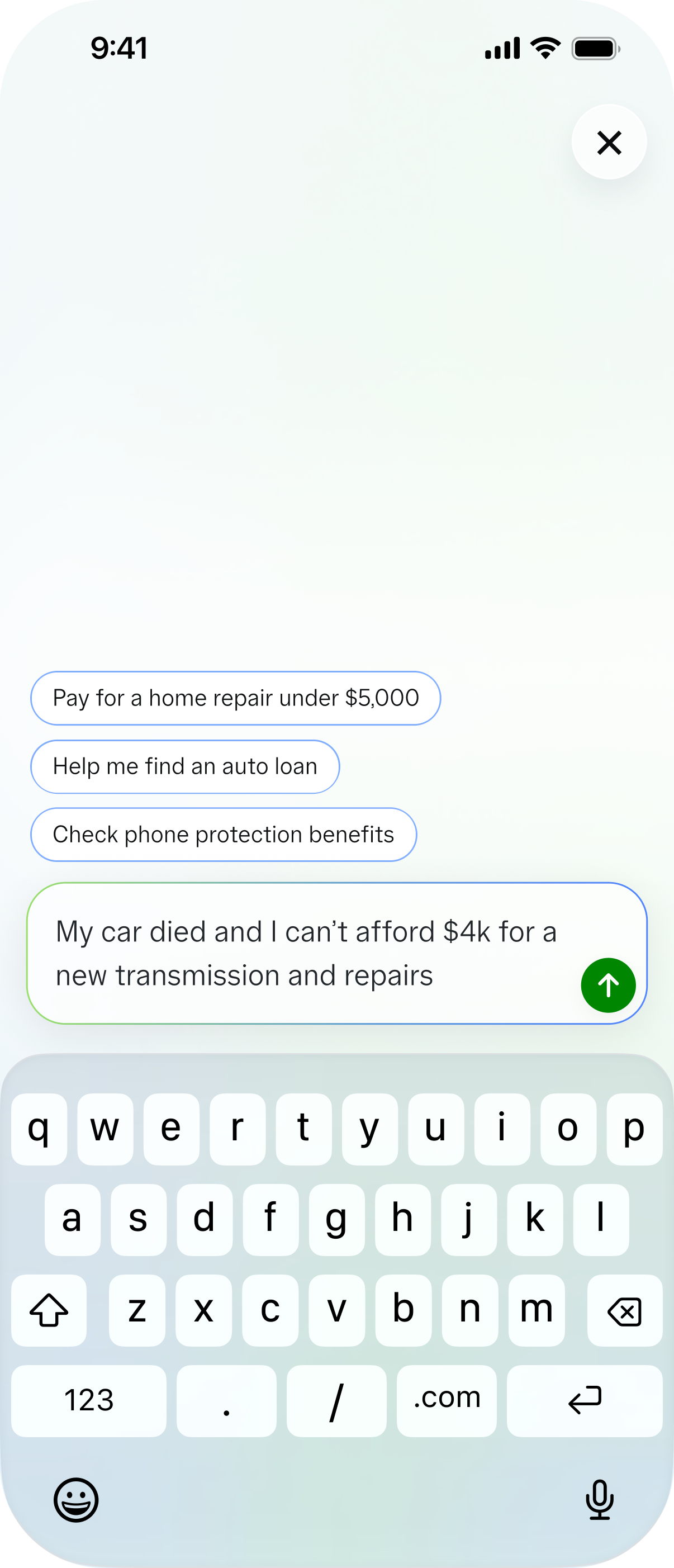
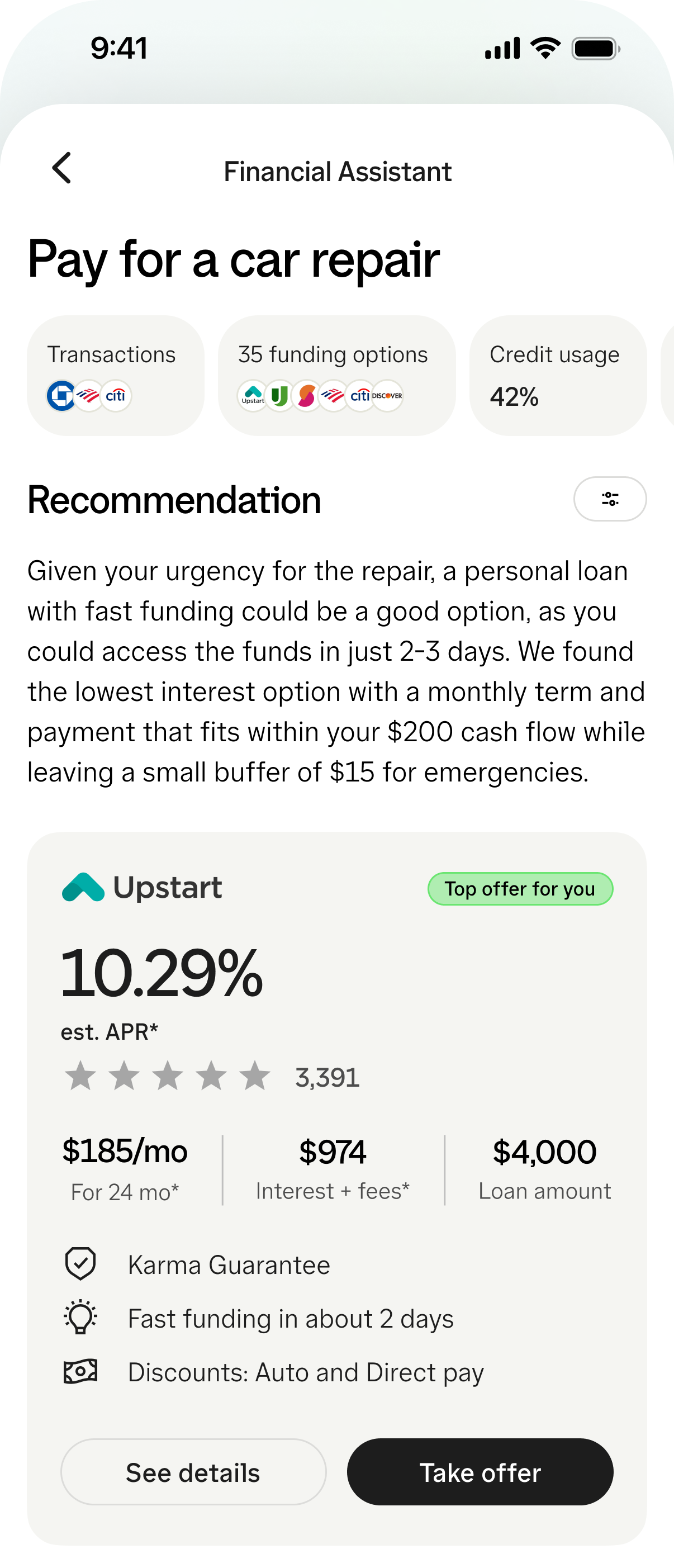
I created a live prototype connected to an API to show how we could scale the model for financial shopping decisions across multiple product categories.
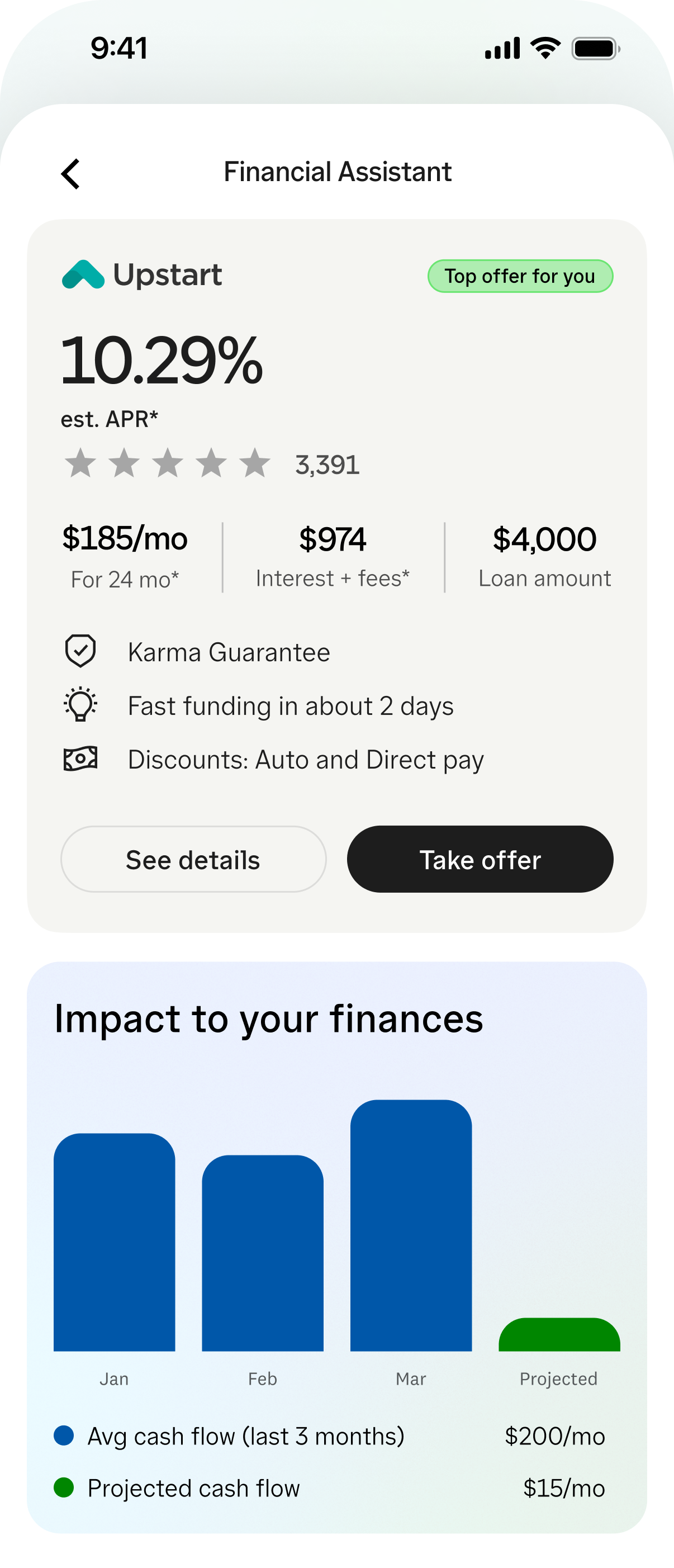
I built the prototype as a live AI-powered flow with a local API route, product rules, and realistic response logic that product and engineering leaders could use and critique. The prototype compared loans, cards, cash flow, and other options, then carried the user toward an eligible next step while keeping the choice in their control.
That work helped move the direction onto the roadmap and shaped the need for a team that could build the model into the product.

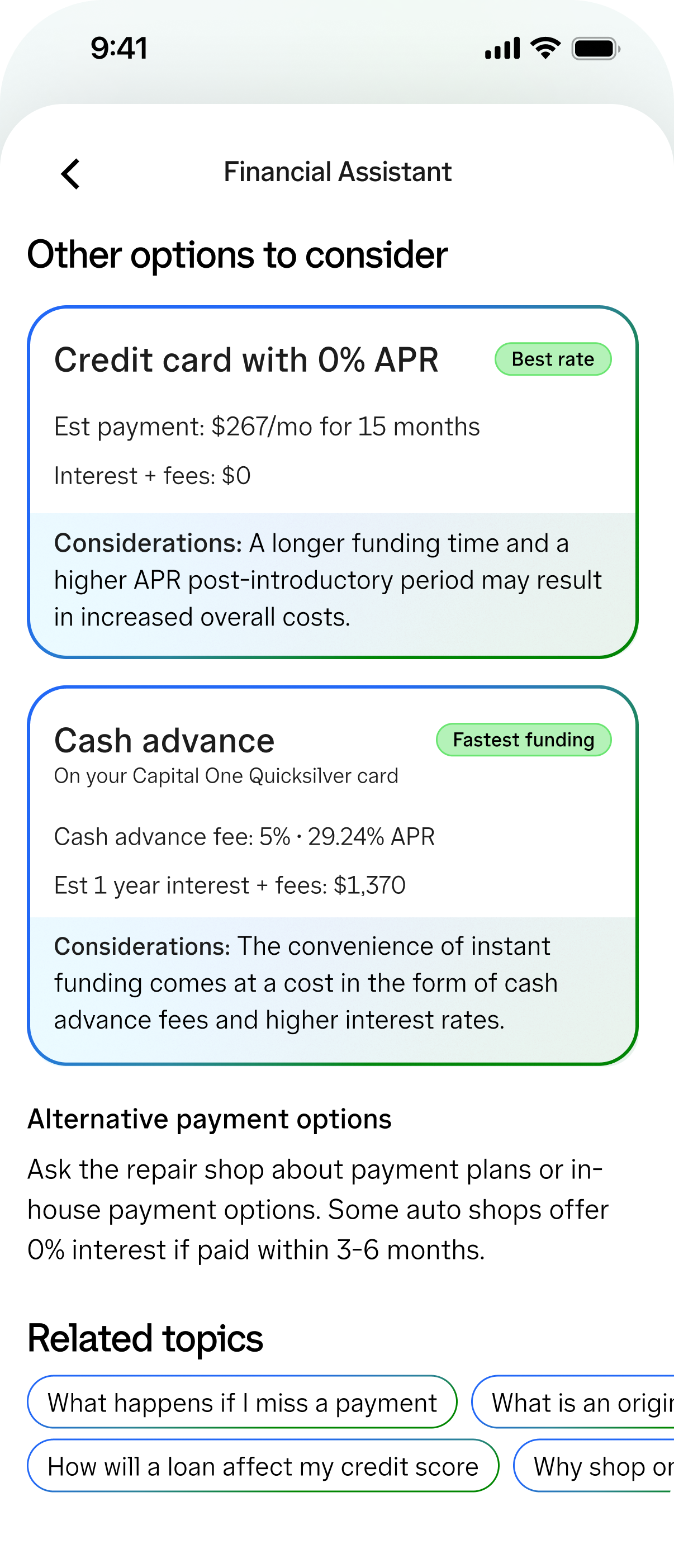
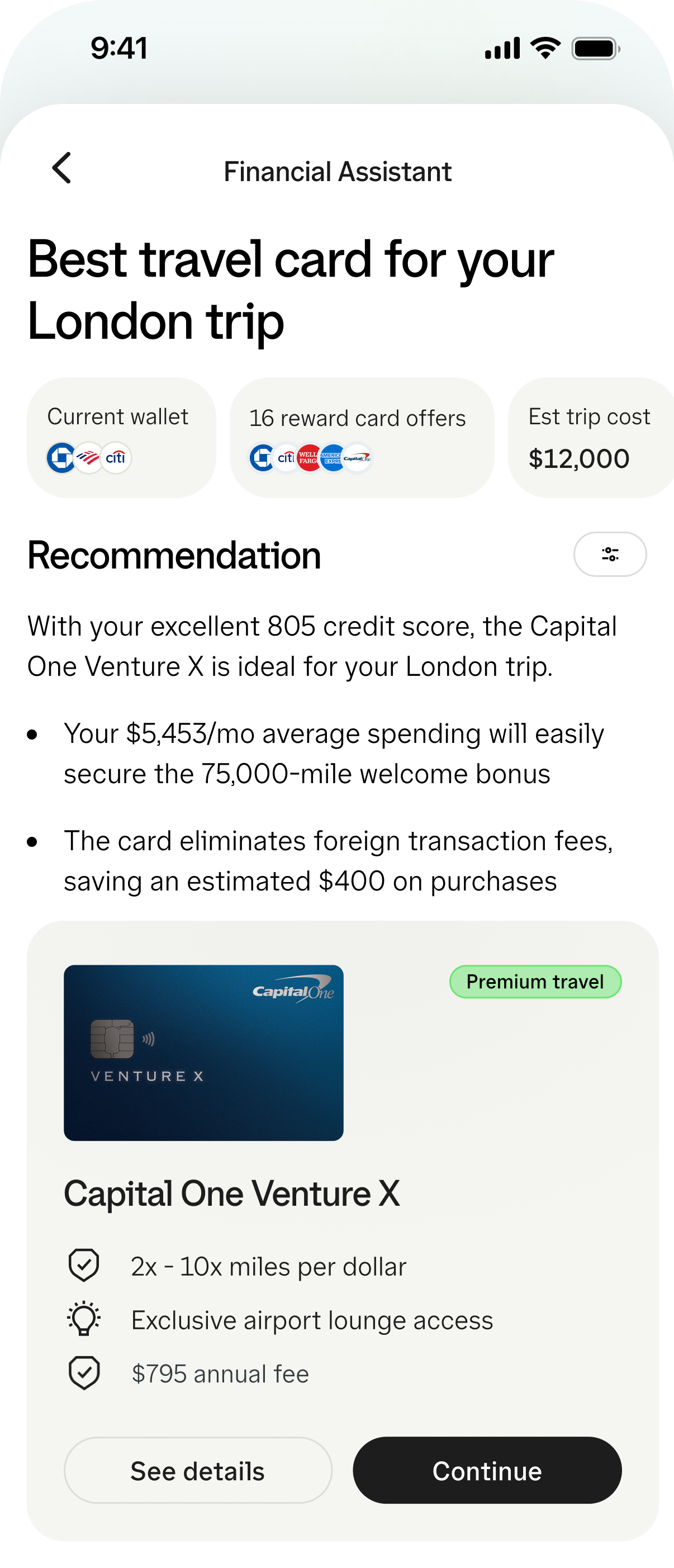
One offer system across financial categories
The generated marketplace needed a consistent way to present different products for easy comparison while keeping the facts that shaped each decision visible.
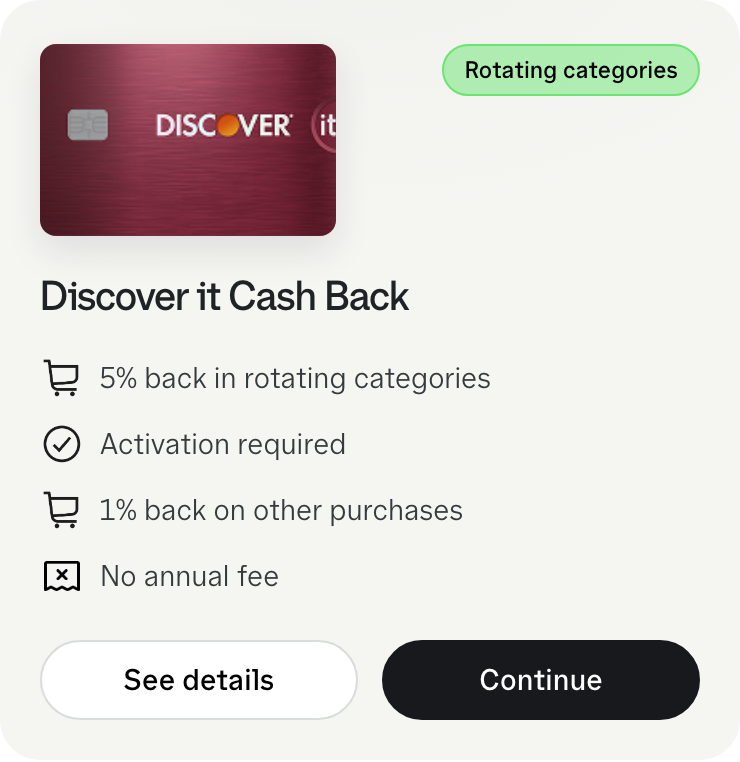
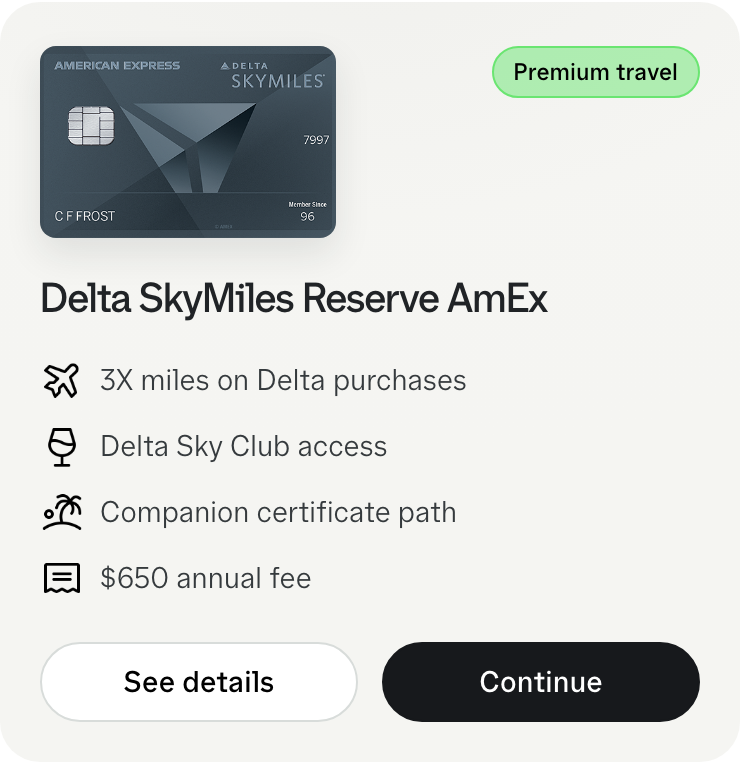
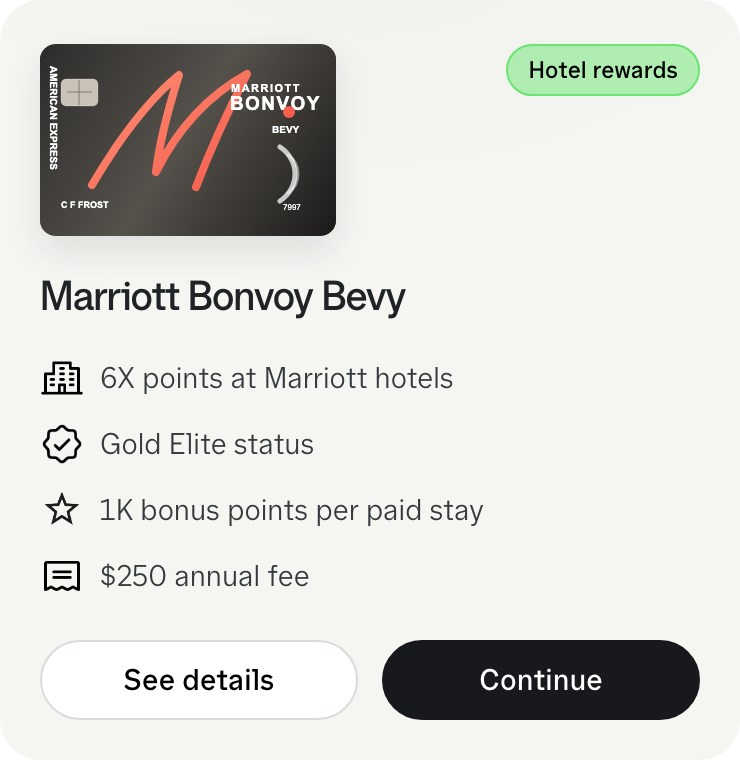
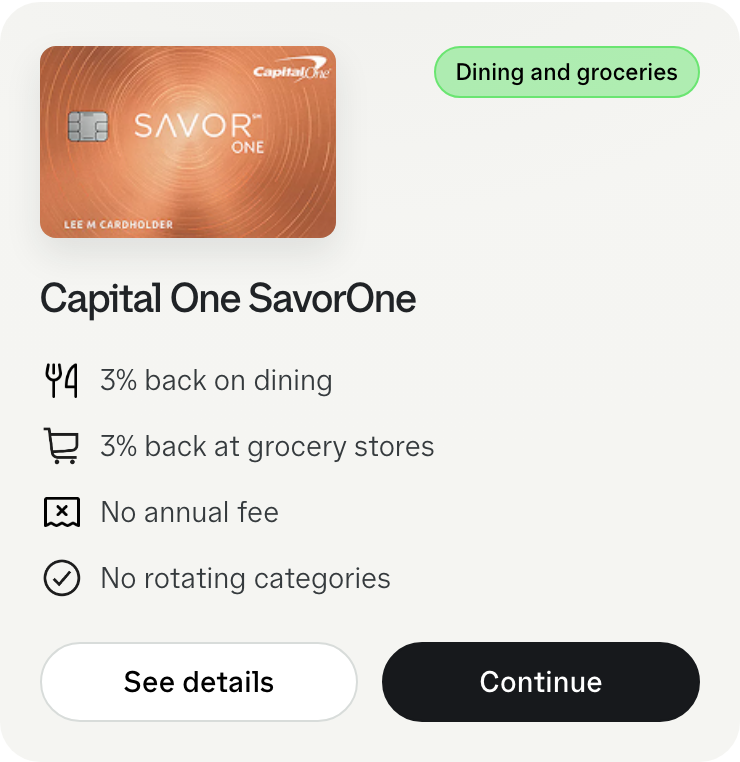
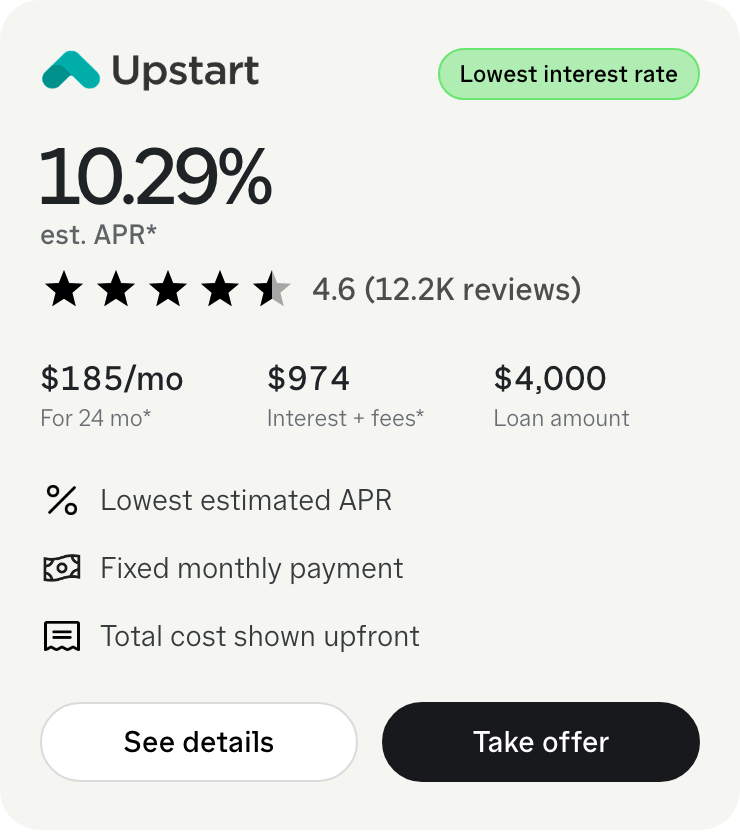
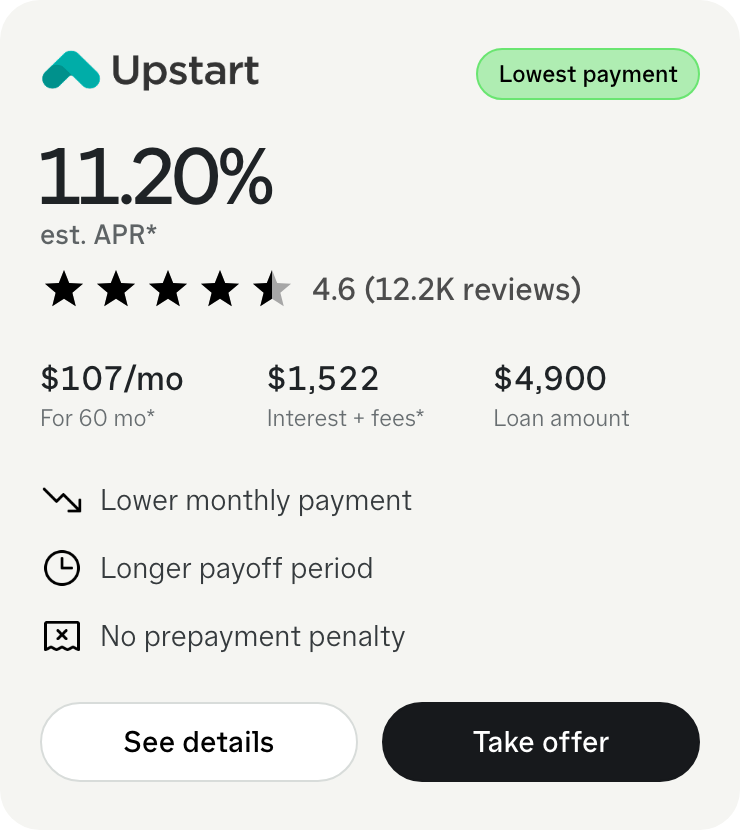
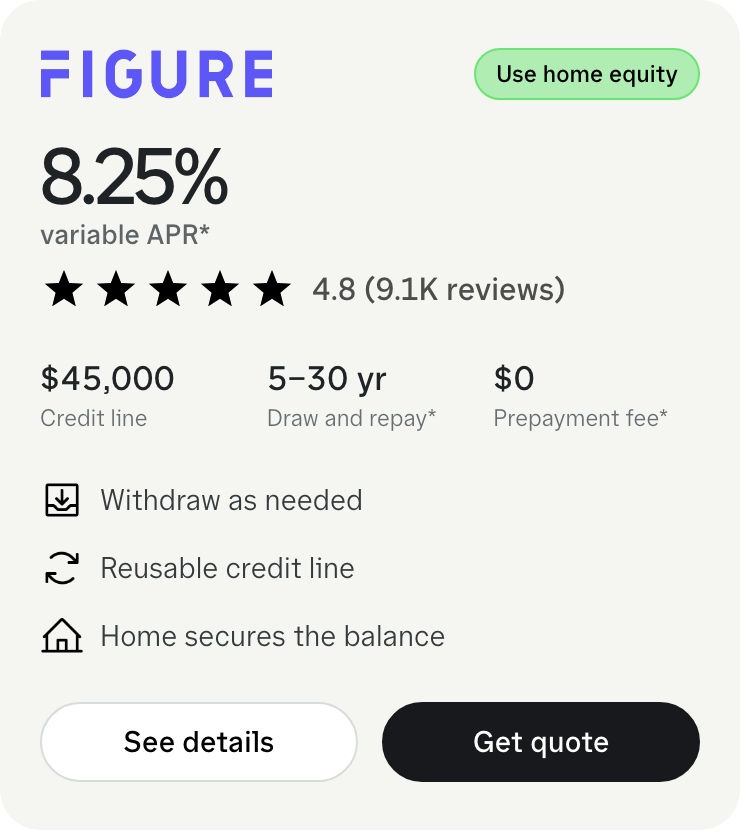
I built a shared offer tile system for credit cards, personal loans, and home loan and equity products. Each category kept a consistent hierarchy for the product, recommendation, terms, and next step. For credit cards, the system could also feature different benefits from the same offer based on the user’s question.
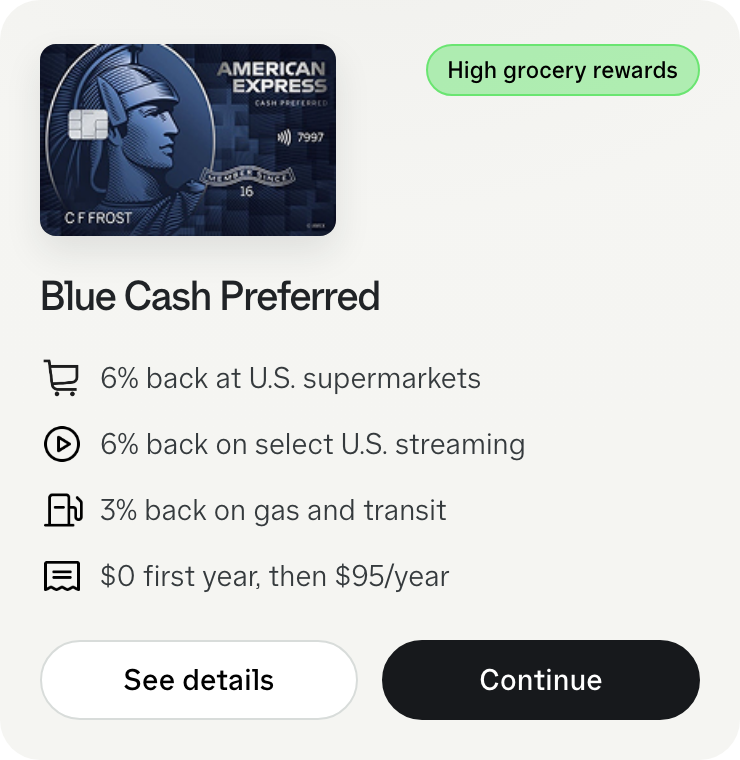
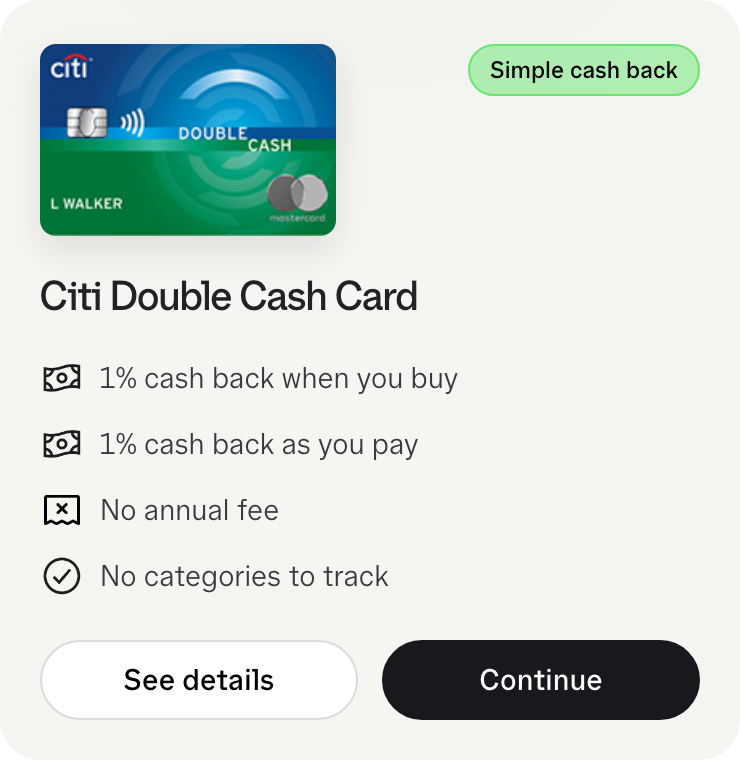
Results
The experiments showed that adding personalized context with an LLM could improve confidence and revenue performance.
Launched experiments added personal context at specific decision points and produced measurable revenue-per-user lifts.
Experiment totals
$3.4M
monthly revenue lift vs. control
See Why
- +1.9%
- revenue per user
- ~$1.15M
- monthly revenue lift
Help Me Decide
- +2.1%
- revenue per user
- ~$800K
- monthly revenue lift
Snipes Explainer
- +5.1%
- revenue per targeted user
- ~$320K
- monthly revenue lift
Should I Get This Card?
- +2.3%
- revenue per targeted user
- ~$1.16M
- monthly revenue lift
Over a six-month period, the AI Shopping Assistant moved from a series of small shipped experiments to a full working prototype that generated marketplace pages around a user’s custom questions and financial profile.
Beyond the $3.4M incremental monthly revenue increase, the larger result was creating future product direction. The work showed that AI was most useful when it made the marketplace explainable and shaped around the user’s decision-making needs.
That became the broader pattern: understand user intent, then assemble the recommendations and explanations around it.
User interviews also showed that recommendations felt more credible when users could see the inputs, ask follow-up questions, and compare alternatives. Financial decisions often include emotion, risk, and urgency, so the mathematically best option was not always the right one for the person. Follow-up questions and alternatives gave users control to refine the recommendation.