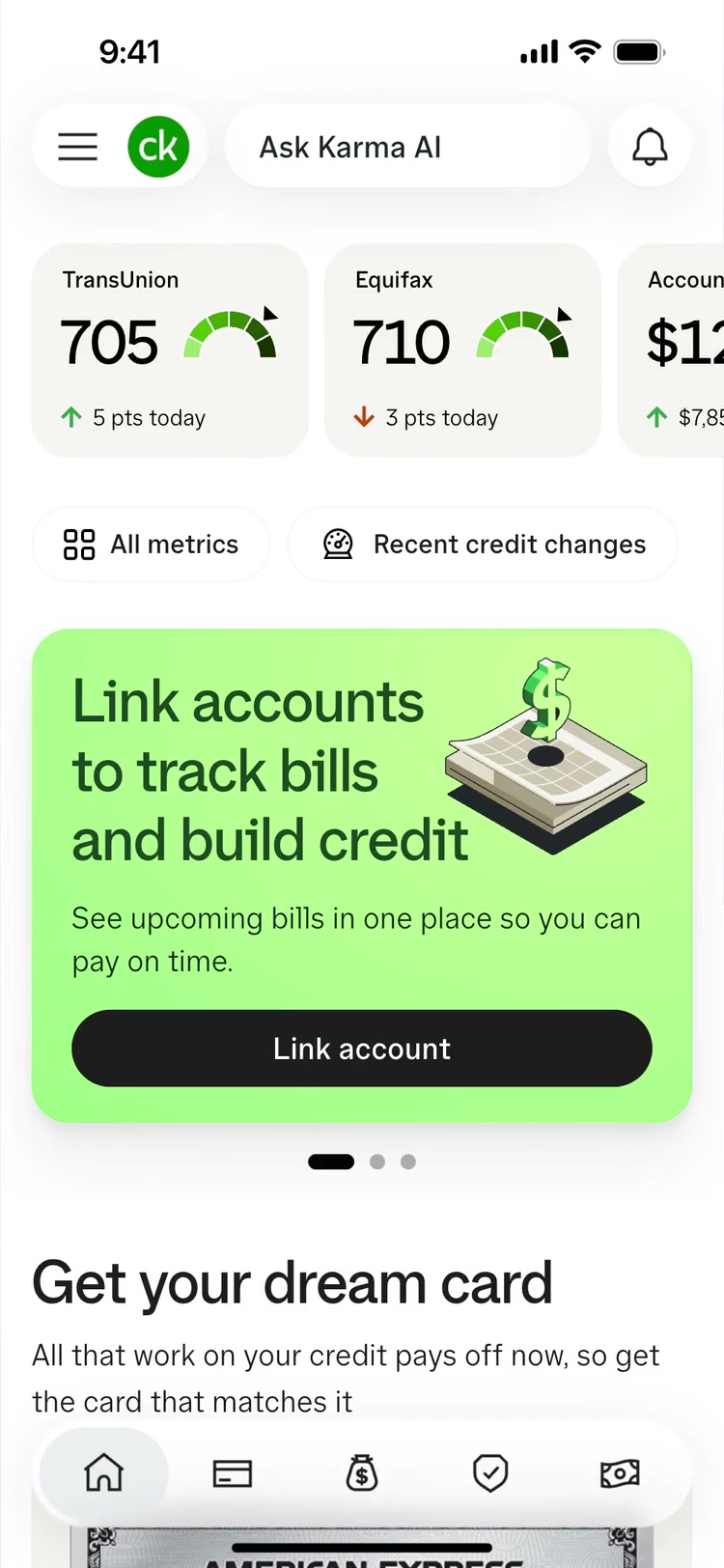

Challenge
Help users understand the past and plan what comes next
Cashflow was Credit Karma’s most-visited account surface, but it was built for reviewing past activity. To plan ahead, users had to piece together income, bills, and expenses across several views. They couldn’t quickly see what was coming, when it was due, or what they could safely spend. Any change also had to preserve familiar workflows on a surface millions already used.
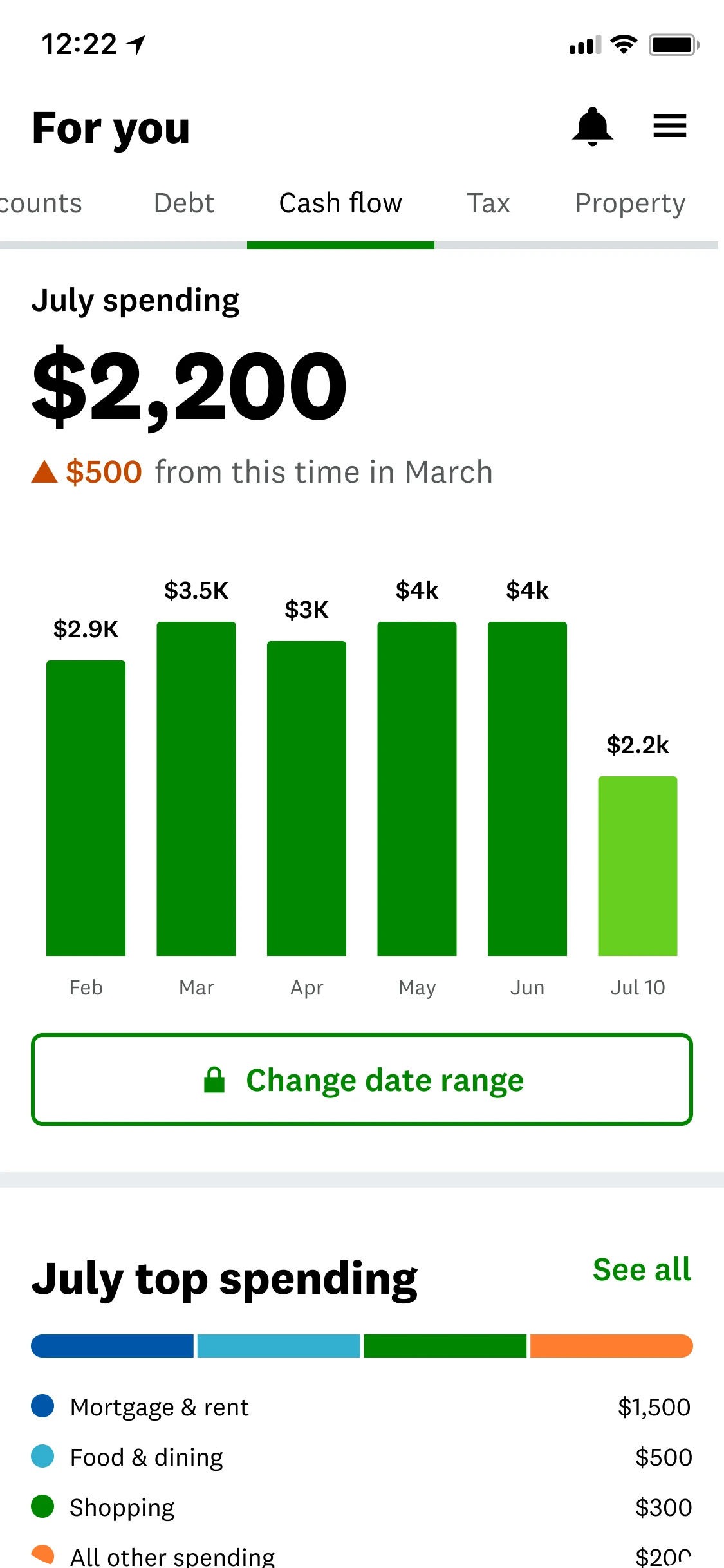
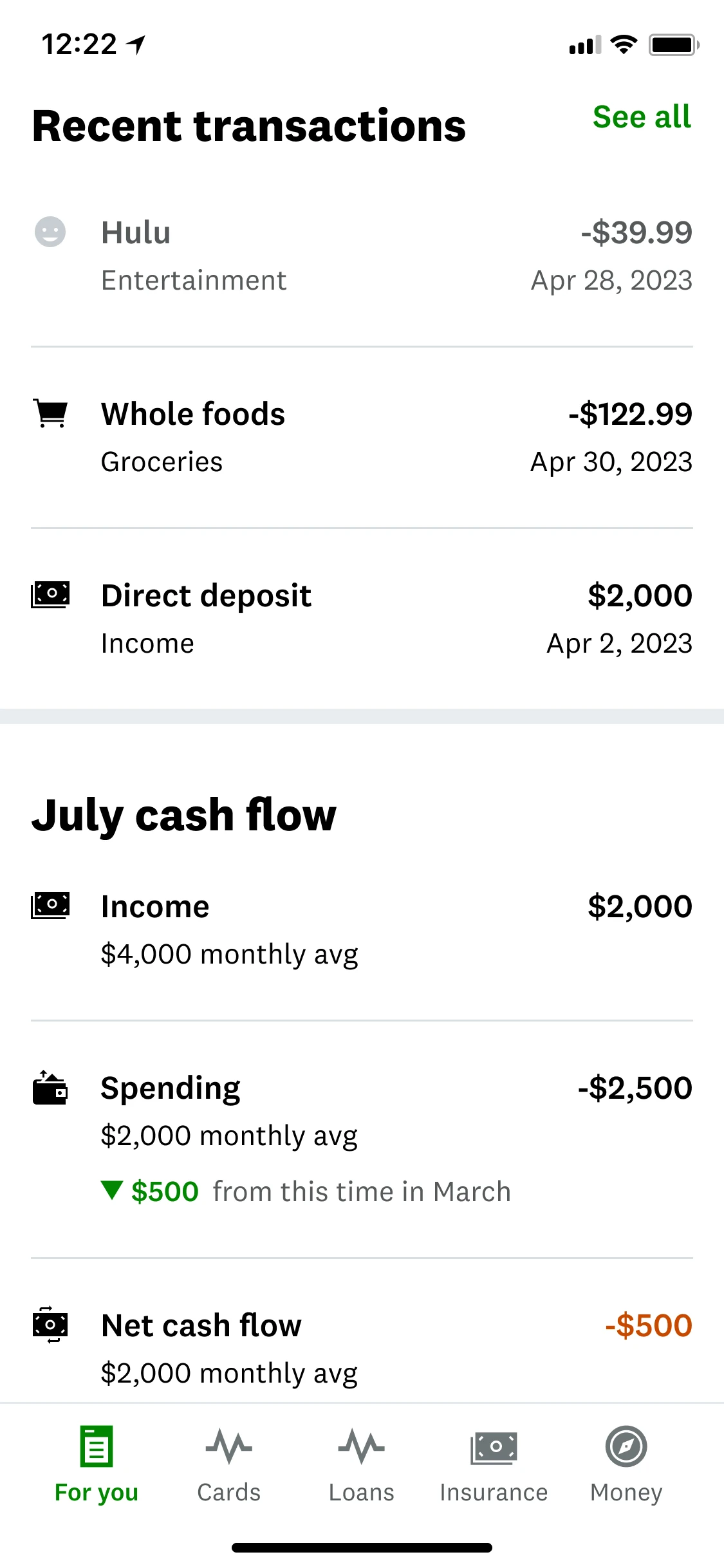
Before : a fragmented, backward-looking experience that made users hunt across views for answers and offered no way to see what was coming next.
Approach
I had created the Money Map concept during a 3-year vision project with Credit Karma’s co-founders. When the work moved into product development, I treated my concept as a hypothesis and designed research to test and redirect it.
Research shifted the model from monthly totals to timing
I designed working prototypes and used them to lead interviews and collaborative design sessions with 16 users. I then partnered with a Market Research colleague to compare what I heard with broader behavior. Based on that evidence, I redirected the product toward timing, due dates, recurring transactions, and the period before the next paycheck.
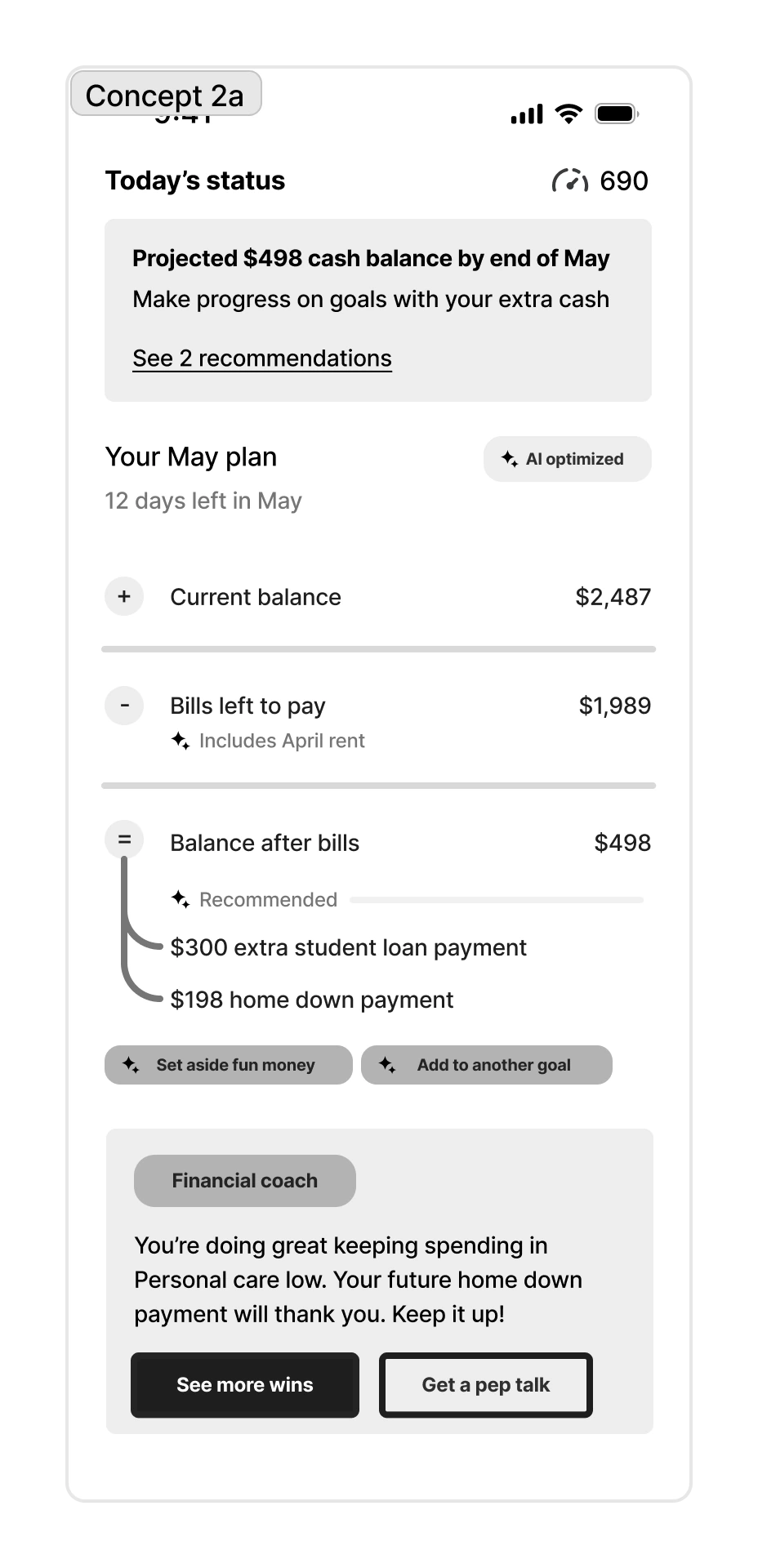
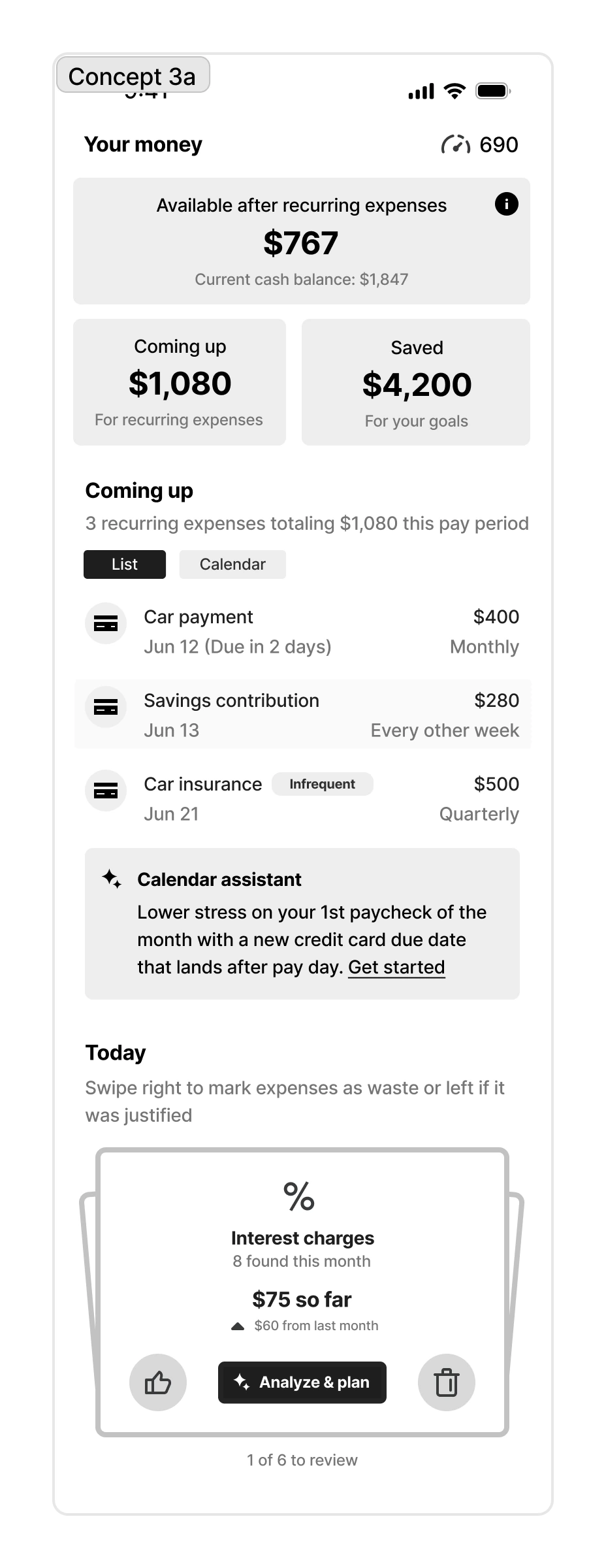
The research narrowed our focus to 3 questions users needed answered: What is coming? When is it due? What can I safely spend?
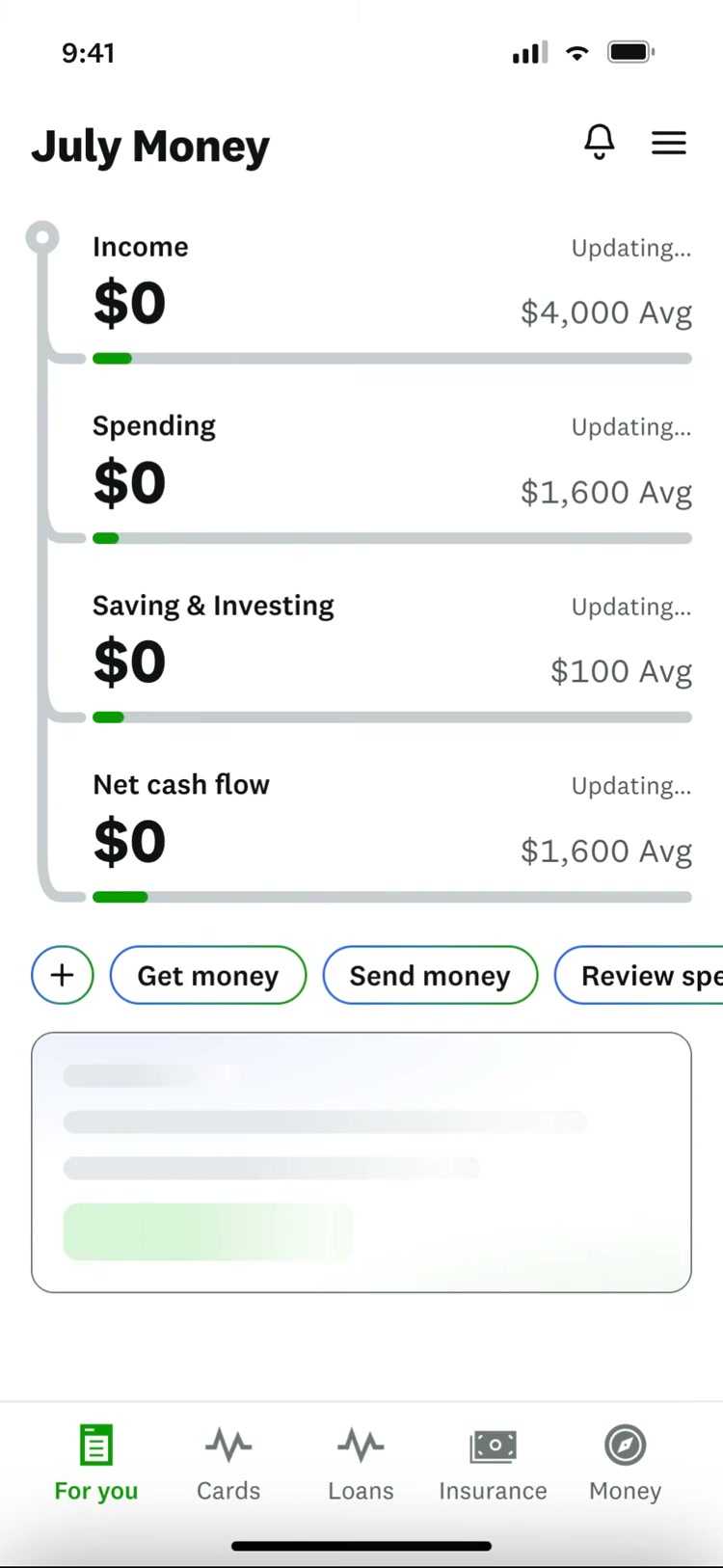
Real financial data helped users articulate what the model was missing
Using a working prototype built with AI coding agents, I tested each participant’s real financial data. Testing with their real data uncovered irregular insurance expenses that could throw off several months of planning, shifting income, and planned credit-card payments users wanted to adjust based on what they could afford. Those discoveries changed the product direction. We changed the inputs together during each session, which made the model’s assumptions visible. The product needed a useful default, adjustable inputs, and a calculation users could inspect.
Launching experiments in production
I worked with product and engineering partners to structure each release around a different product risk before increasing the investment.
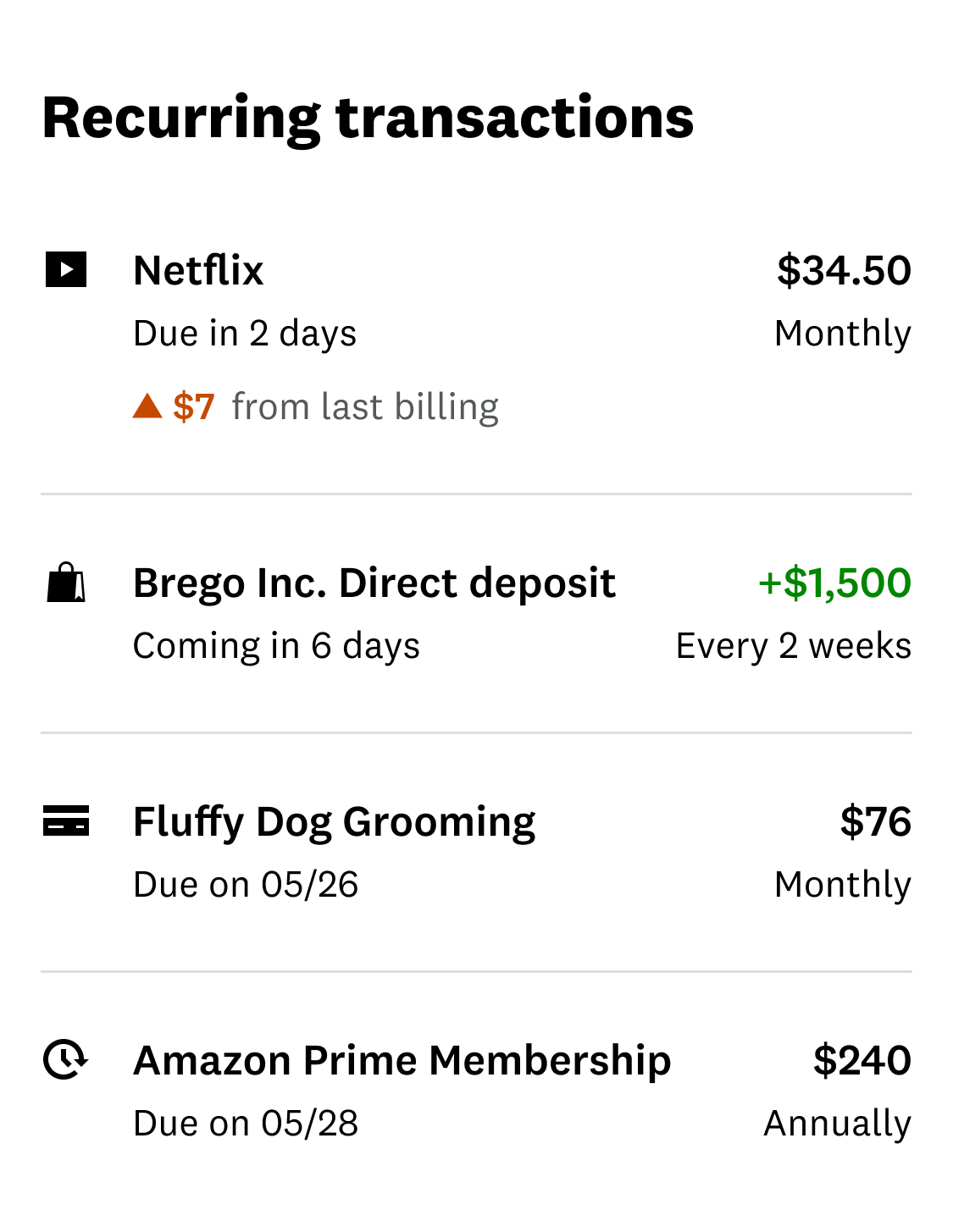
Recurring Transactions experiment
Can we reliably identify what is coming?
We shipped Recurring Transactions and upcoming due dates to live traffic. The controlled experiment increased monthly retention among users with connected accounts by 3.07%, giving us evidence to continue into Bill Calendar and Available Cash.
Recurring Transactions experiment
- 3.07%
- Lift in monthly retention among users with connected accounts
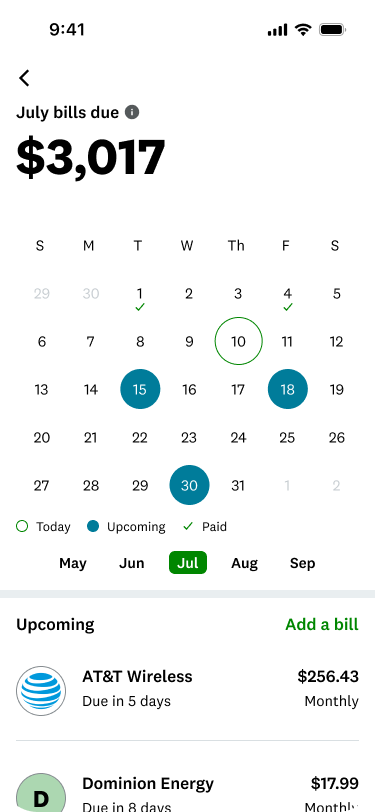
Bill Calendar experiment
Does organizing obligations by time help users return?
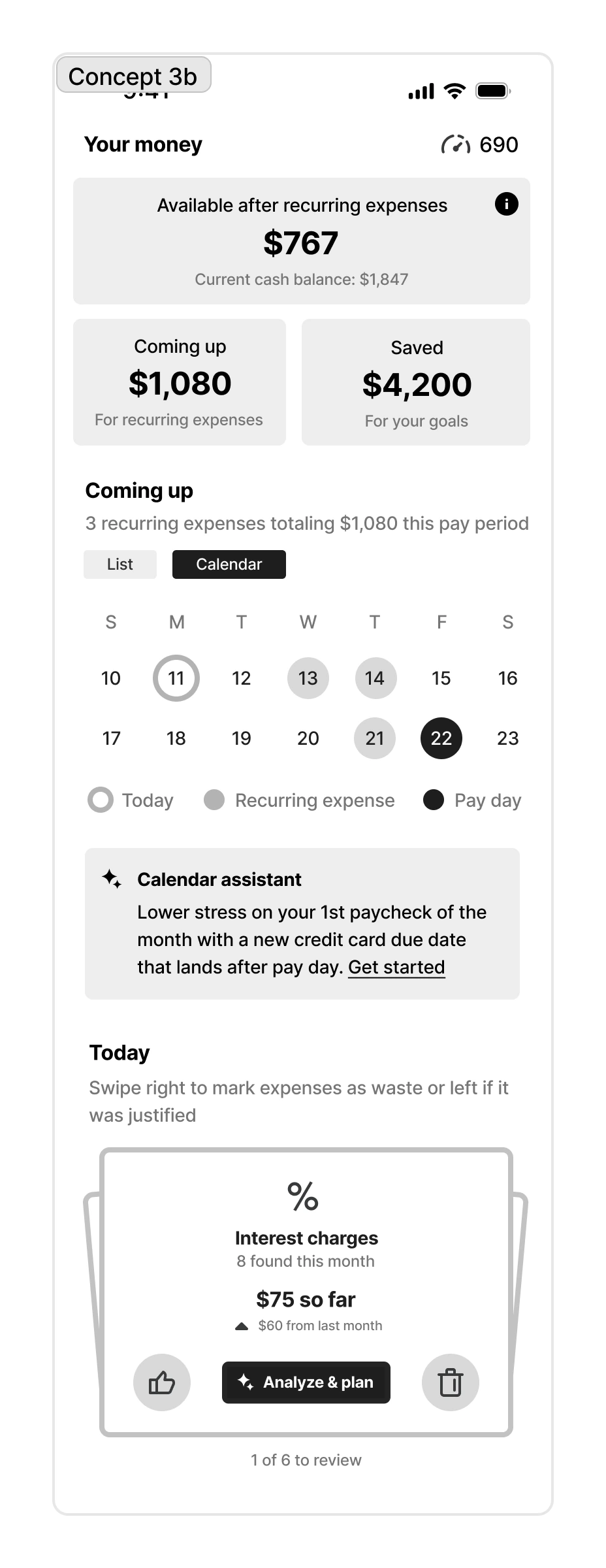
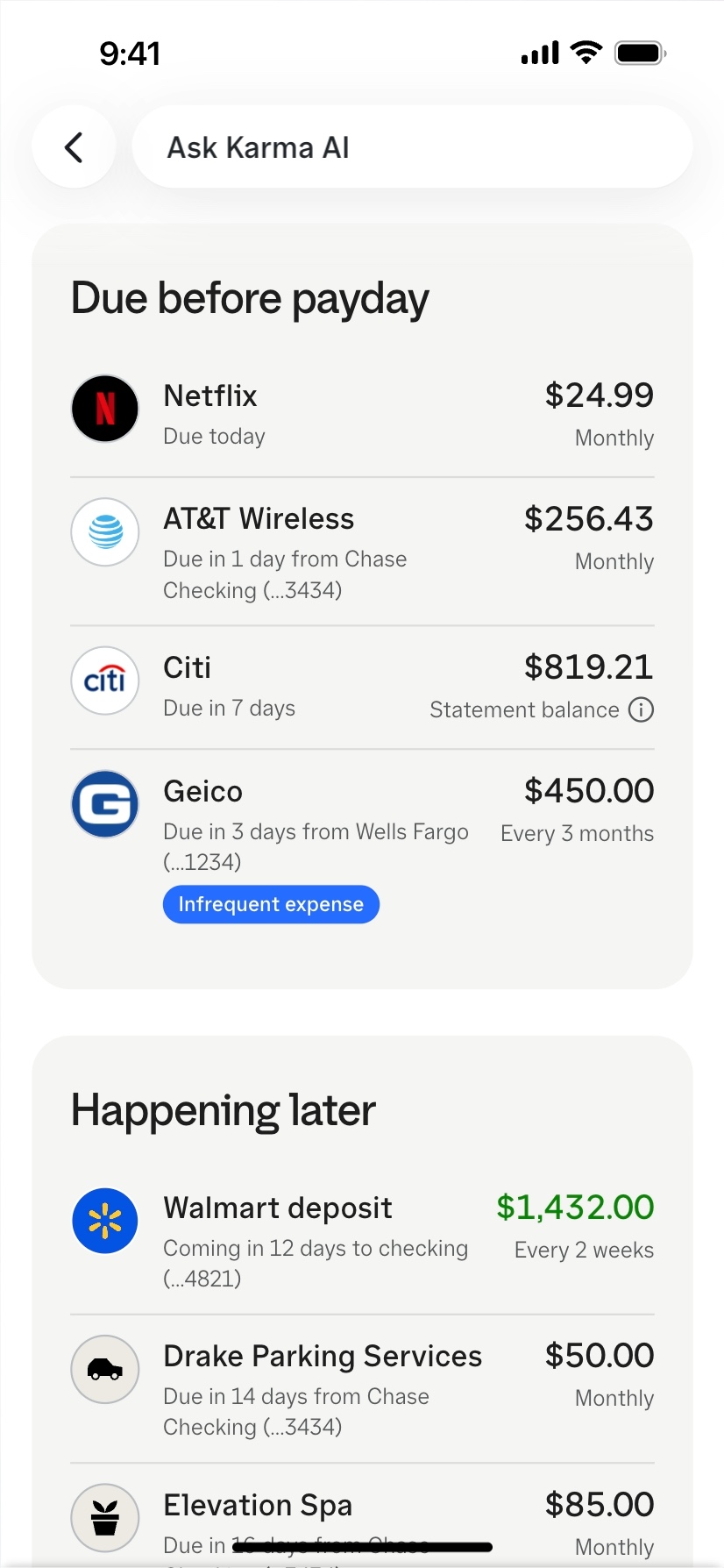
I built Bill Calendar on the Recurring Transactions model, combining predicted income, recurring expenses, bills, and payment status in one view. With engineering partners, I designed the month-to-month animation and front-end safeguards so data delays did not mark payments as missed and users were notified of subscription price changes. Users could move across months and spot irregular charges before they landed.
To make obligations easier to scan, I used transaction data to identify common merchants, secured their logos, and worked with Legal to approve their use. I worked with product and engineering partners to ship the experience. The controlled experiment increased seven-day return by 3.04% on iOS and 6.80% on Android, relative to control.
Bill Calendar experiment
- 3.04%
- Lift in 7-day return on iOS, relative to control
- 6.80%
- Lift in 7-day return on Android, relative to control
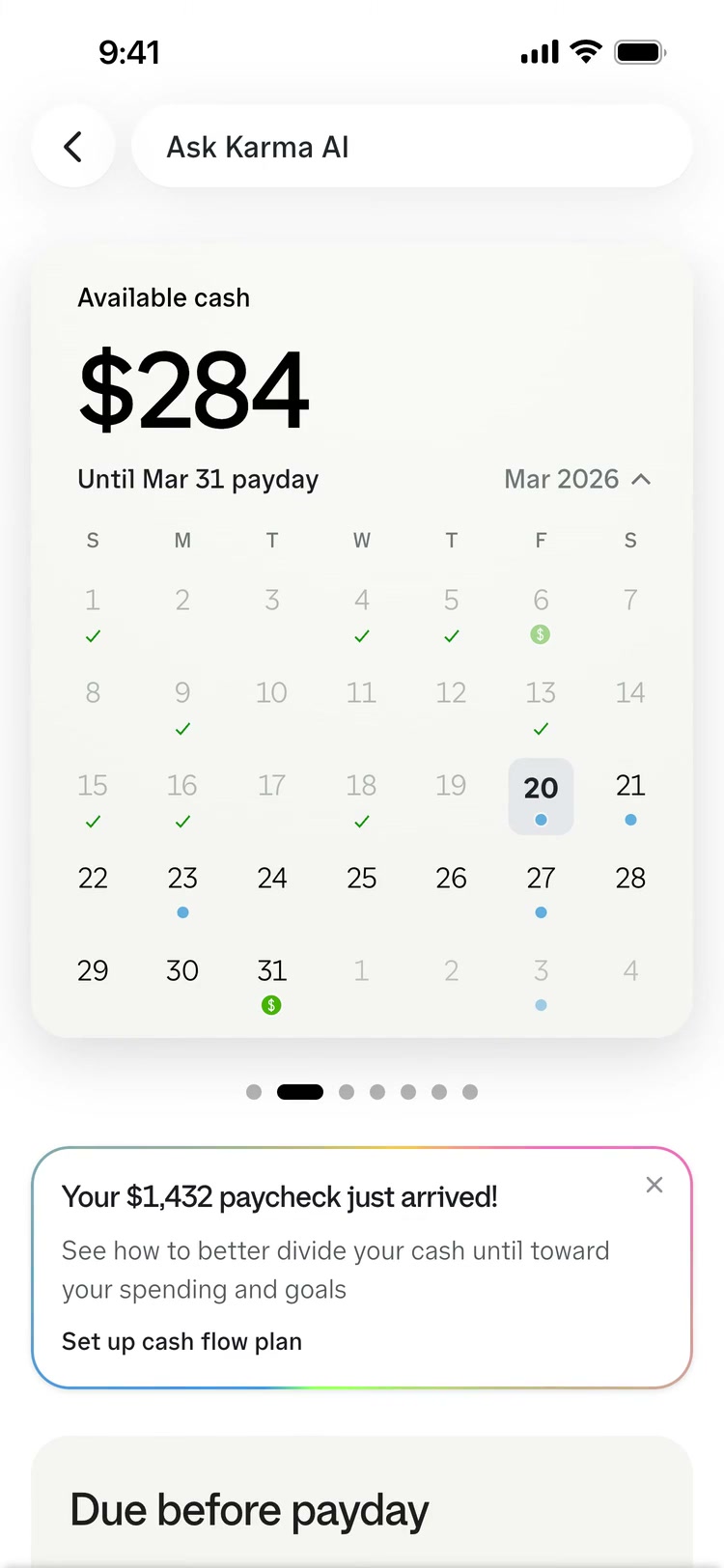
Available Cash experiment
Can the system give users one trusted metric to anchor on?
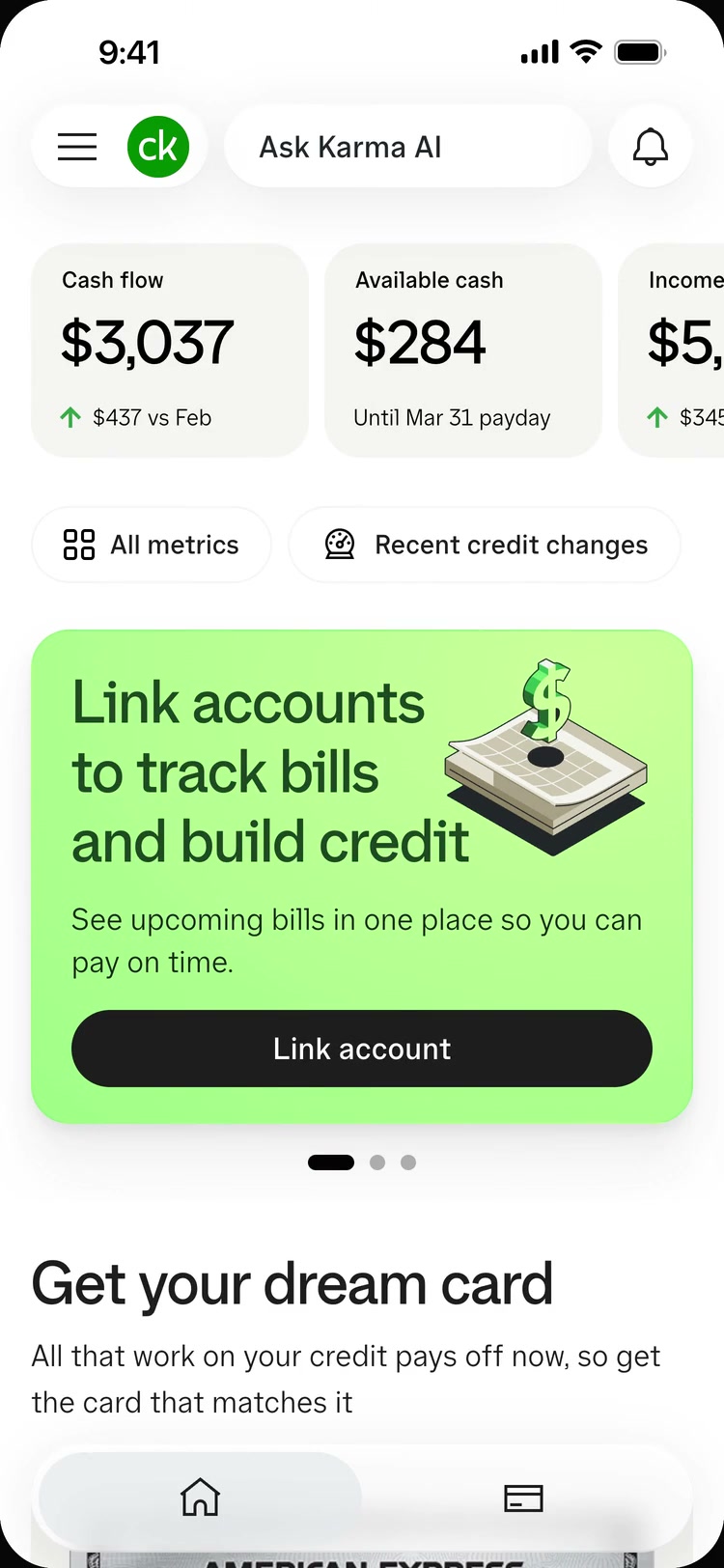
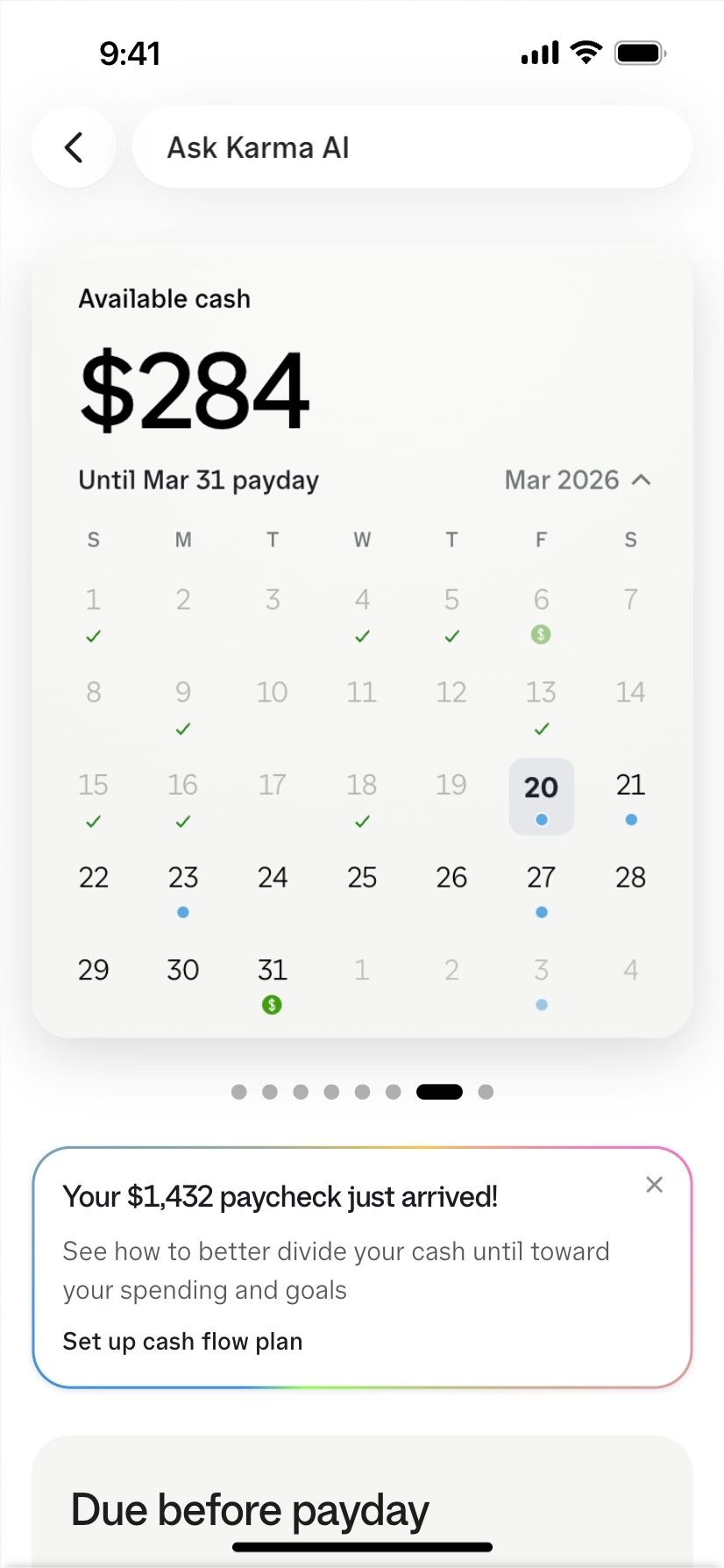
Available Cash built on Recurring Transactions and Bill Calendar. I designed one metric around a recurring user question: How much money do I have until my next paycheck? It subtracted bills and expenses due before payday from the user’s checking balance, replacing mental math with one answer.
Users could choose a two-week or monthly view. We increased the recurring-transactions model from weekly to daily runs so expected income, bills, and expenses stayed current. I worked with product and engineering teammates to bring Available Cash to market. The controlled experiment increased weekly active use by 2.9%, supporting continued investment in the direction.
Available Cash experiment
- 2.9%
- Lift in weekly active use
Build the interaction in working software
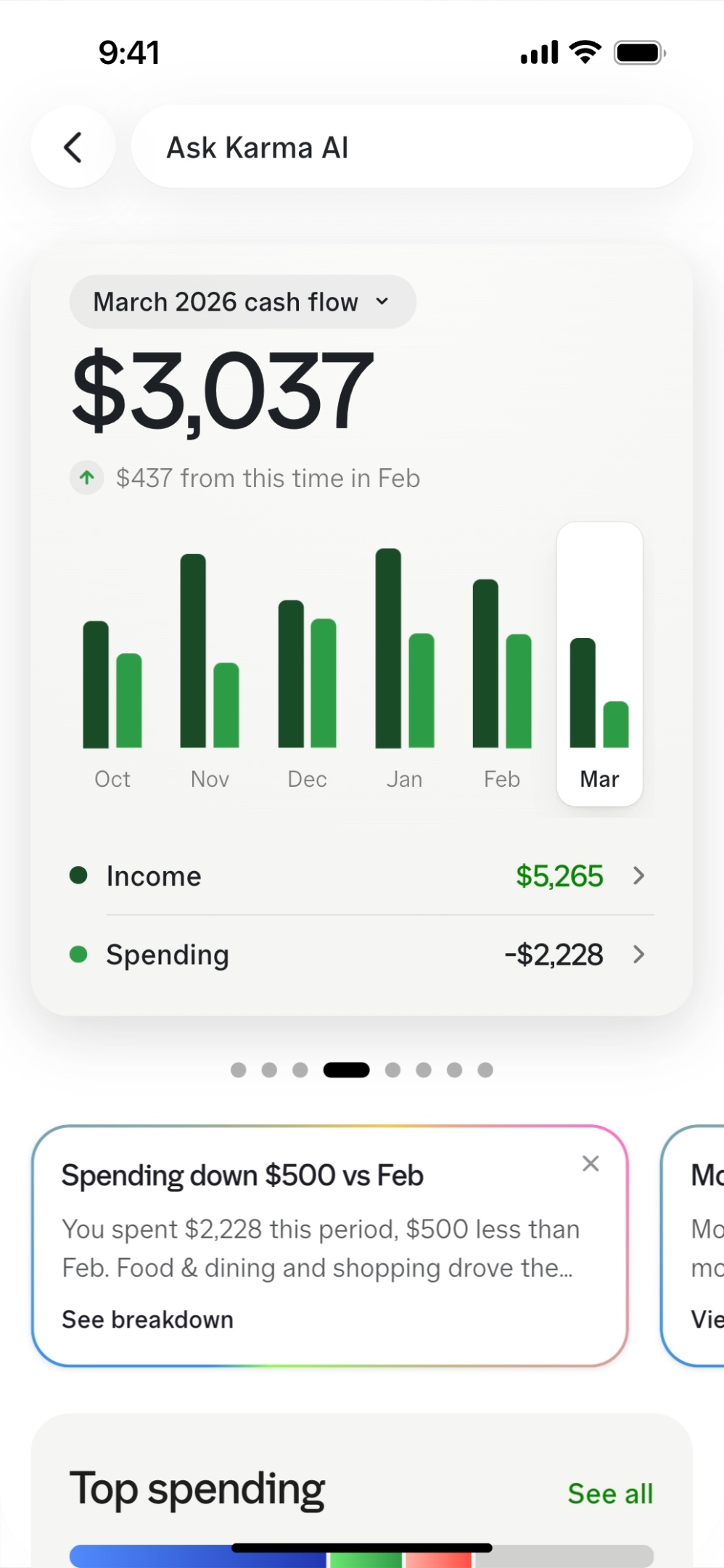
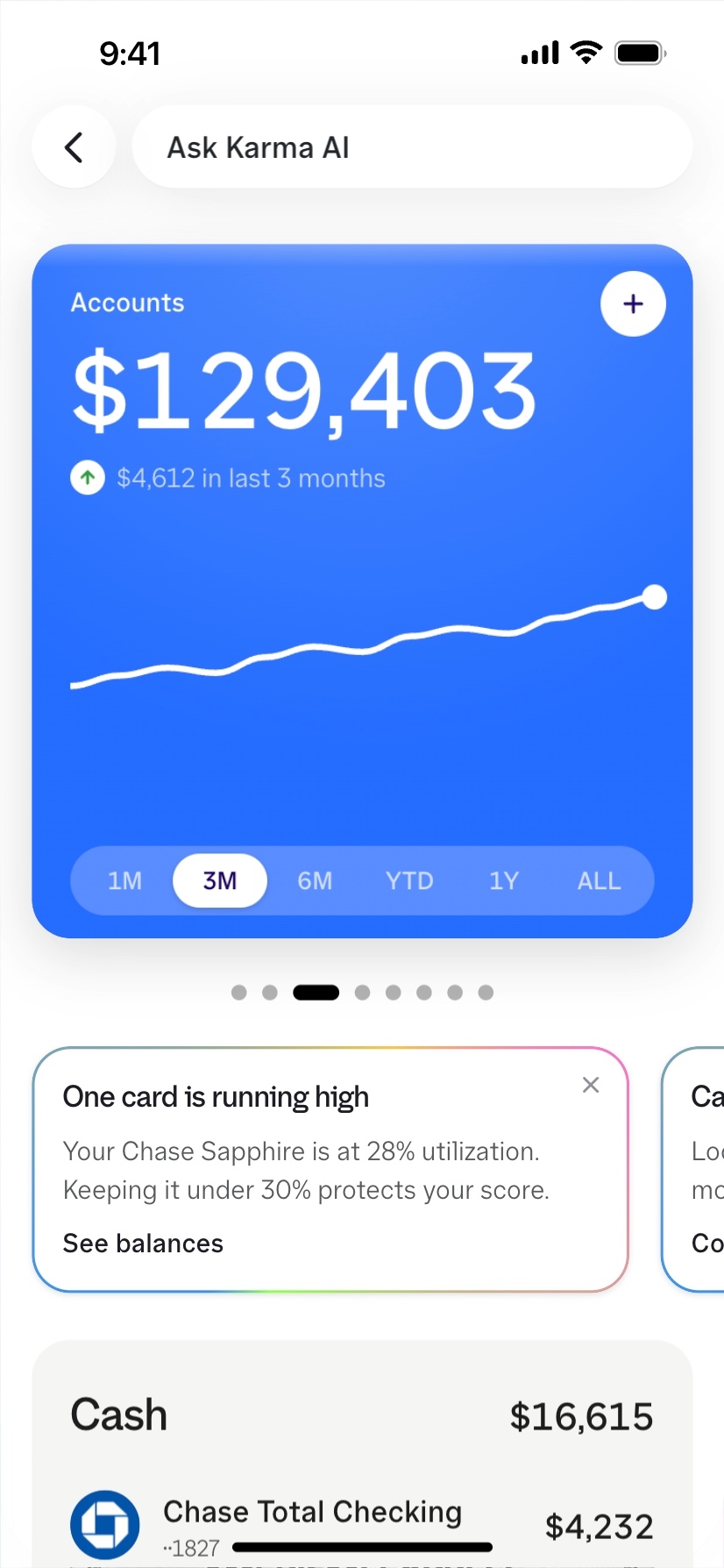
Charts became navigation across Cashflow, Spending, and Income. Users could tap a month or swipe through time while totals, categories, and transactions updated together. I used the same interaction model for calendar views, moving between 2-week and monthly timeframes.
I used Claude Code to make changes in code, test those changes myself on iOS and Android devices, and submit pull requests that senior engineers reviewed. AI coding agents let me refine motion and smaller interaction details without documenting every adjustment as a handoff.
- Real data: The prototype connected to account data through Plaid.
- Native testing: I distributed iOS builds through TestFlight for evaluation on teammates’ phones.
Show the patterns behind the monthly total
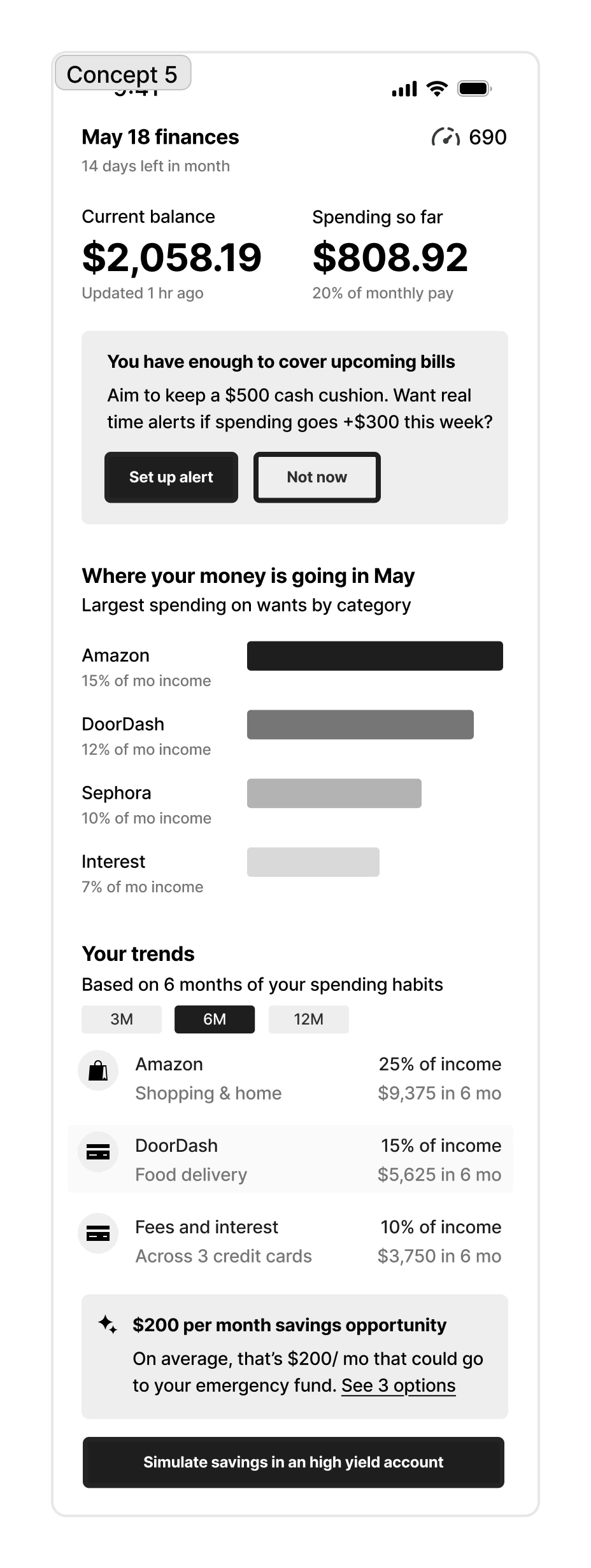
The redesign gave users more ways to understand where their money went.
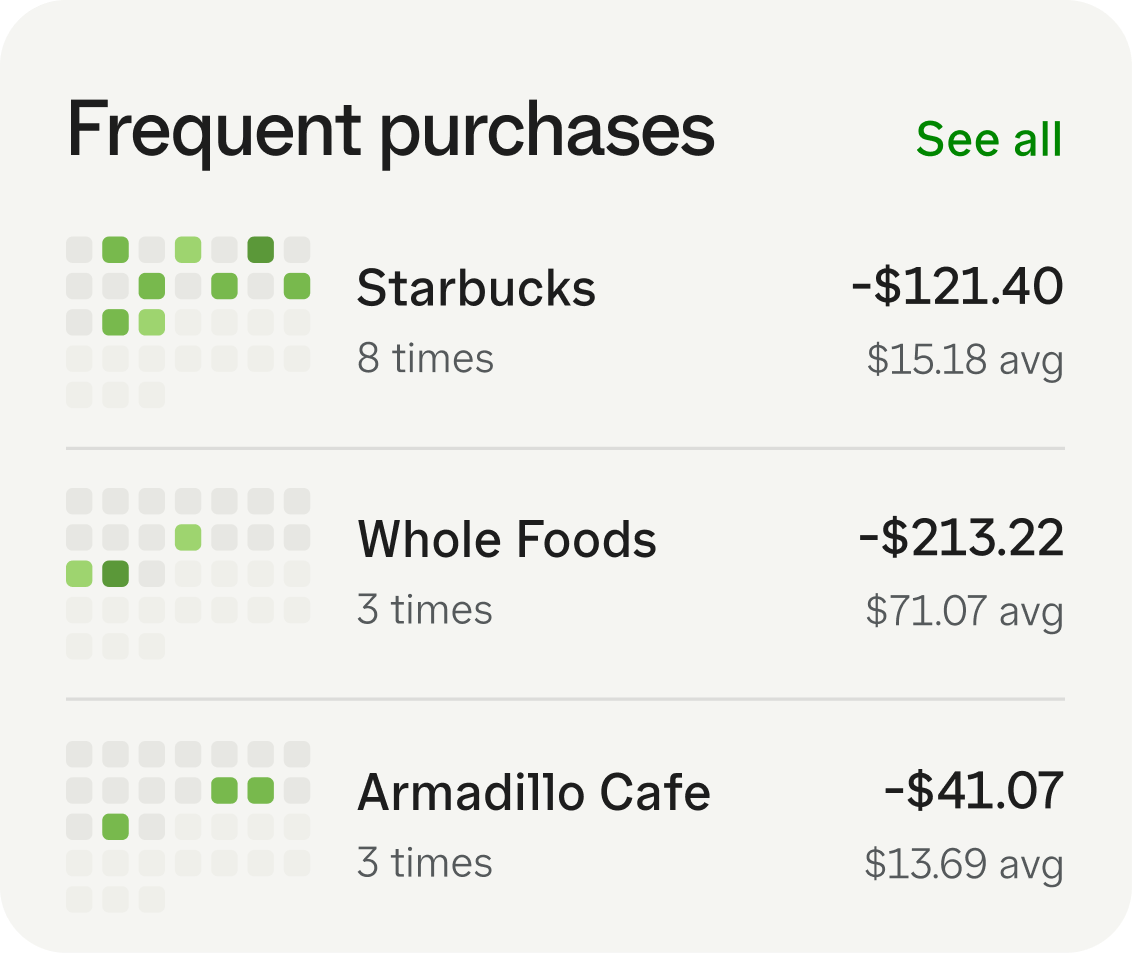
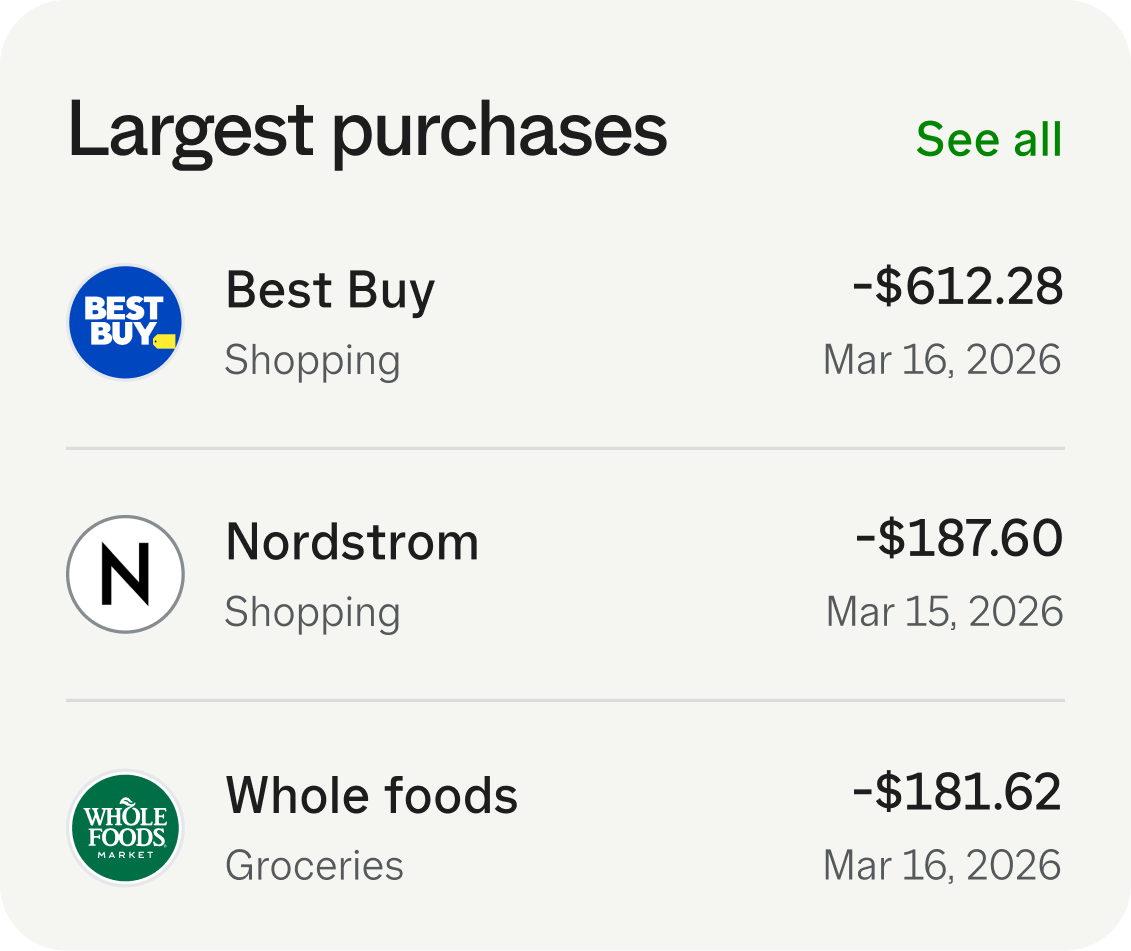
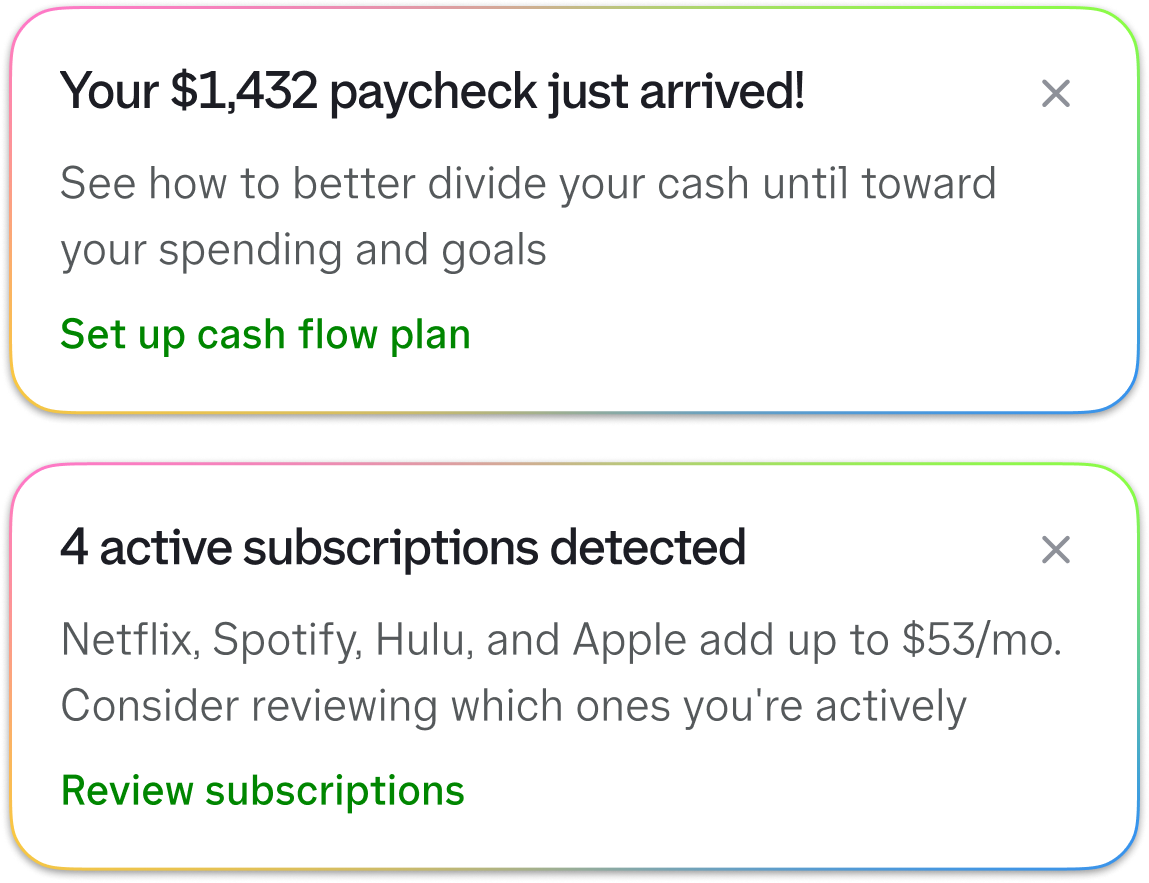
I added Frequent Purchases, a GitHub-style activity grid that made repeated merchant behavior visible without opening a transaction list. Largest Purchases pulled unusual transactions forward so users could review the outliers first. AI insight cards connected those patterns to an explanation or next step.
Results
The releases established a new direction for Cashflow
Three controlled experiments improved monthly retention, 7-day return, and weekly active use. Each result supported continued investment in forward-looking money management.
Recurring Transactions
- 3.07%
- Lift in monthly retention among users with connected accounts
Bill Calendar
- 3.04%
- Lift in 7-day return on iOS, relative to control
- 6.80%
- Lift in 7-day return on Android, relative to control
Available Cash
- 2.9%
- Lift in weekly active use
Weekly use grew among users with connected accounts
Over 6 months, users with a connected financial account grew from 8.5M to more than 10M. Weekly visitors to Cashflow or Available Cash grew from 2.78M to 4.38M. These figures show the broader product trend; the experiment cards above report the controlled effects of individual releases.
Among users with at least one connected financial account
Baseline: Before experiment rollouts
32.7%
weekly active
After six months of releases and iteration
43.8%
weekly active
From tracking money to helping users plan
Research showed that users wanted to understand what was coming and how much they could safely spend.
Recurring Transactions, Bill Calendar, and Available Cash brought upcoming income, bills, expenses, and available cash into one financial picture. Those releases established the direction for Credit Karma’s next phase of money-management work: helping users see a shortage early enough to act.